Digital Architecture & Client Acquisition Strategy
By Ranu Patel | Founder & Website Strategist | Experience: 16+ Years | Updated: September 2026 | ~14 min read
Executive Summary: Being an exceptional coach and acquiring a predictable pipeline of coaching clients are two distinct capabilities. Potential clients rarely search for broad terms like “coach”—they search for solutions to urgent, specific problems like career pivots, business bottlenecks, or executive transitions. This practical guide outlines a complete digital system linking problem-first positioning, high-intent website architecture, search visibility (SEO, Local, and AI Search), LinkedIn personal branding, and frictionless conversion automation.
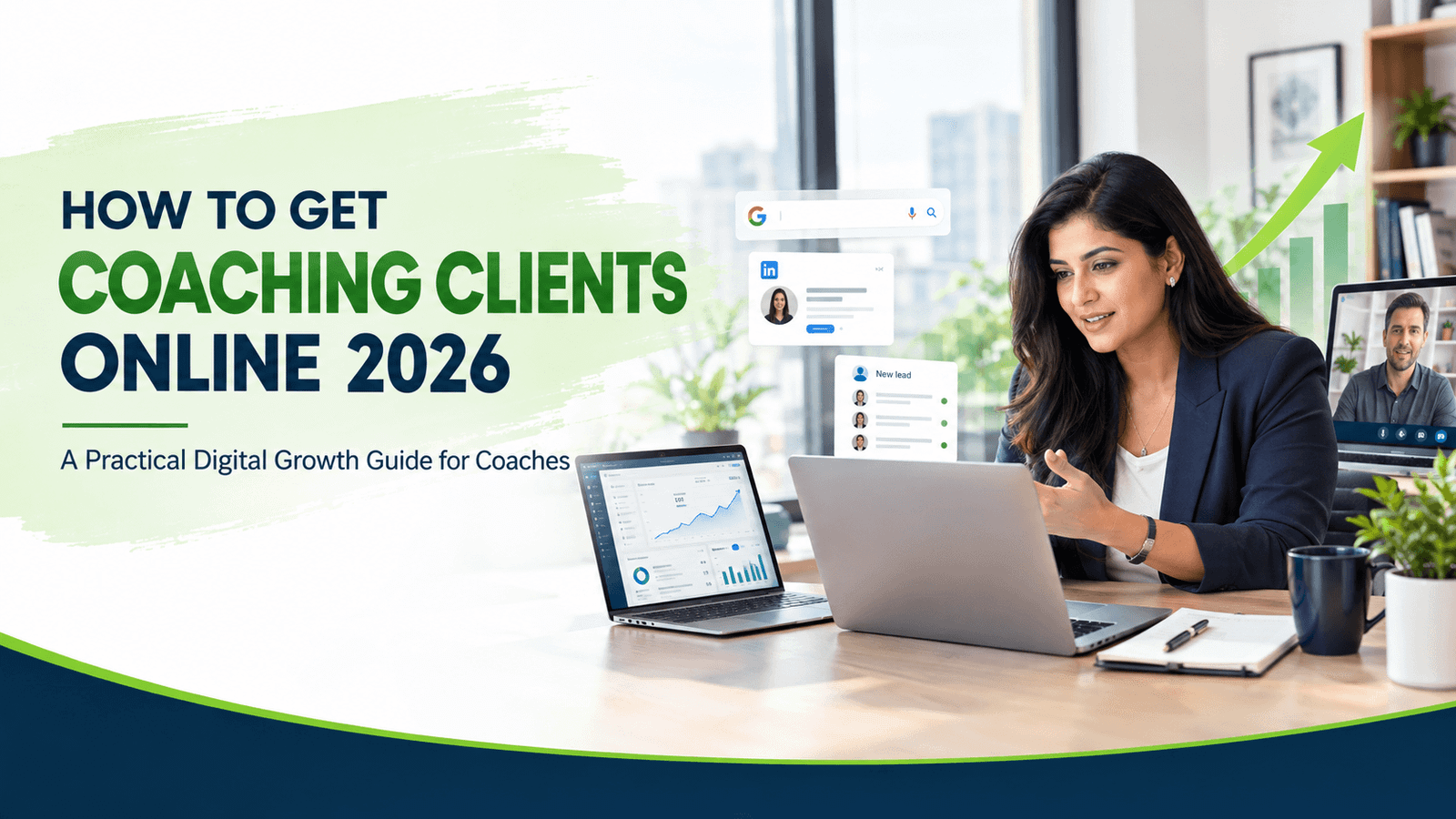
How to Get Coaching Clients Online in 2026: A Practical Guide for Business & Career Coaches
Being a good coach and getting a steady flow of coaching clients are two very different things. You can have years of experience, prestigious certifications, and genuinely care about your clients, yet still find yourself asking: “Where are my next clients going to come from?”
Analyzing real coaching enquiries reveals a fundamental truth: people rarely begin their journey searching for a generic “coach.” They search for help with a specific, urgent problem.
Your potential clients may not know exactly what type of coach they need, but they know what they are struggling with today. Your entire digital presence must meet them precisely at that point of friction.
1. Start With the Problem Your Client Is Actually Trying to Solve
A primary mistake coaches make on their websites is placing themselves—rather than the client’s outcome—at the center of the message.
❌ Credentials-First Positioning
“I am a certified business coach with 15 years of corporate experience.”
(Informative, but fails to answer “Can you help someone like me?”)
✔ Outcome-First Positioning
“I help first-time business owners turn an overwhelming idea into a practical growth plan.”
(The visitor instantly sees their own transformation.)
Before launching any digital marketing or SEO consultant initiatives, clarify these four core parameters:
- Target Profile: Who exactly are you helping?
- Current Friction: What specific problem are they facing today?
- Desired Outcome: What transformation or change are they seeking?
- Unique Differentiator: Why are you uniquely equipped to guide them?
2. Don’t Build Your Marketing Around the Generic Word “Coach”
The term “coach” is excessively broad. It spans business, career, executive, leadership, life, mindset, productivity, and relationship coaching. Even within a single category like career coaching, buyer intent varies dramatically:
Audience Segmentation in Action:
- Coach A: Specializes in mid-level professionals seeking a complete industry pivot.
- Coach B: Specializes in senior managers transitioning into C-suite leadership.
- Coach C: Specializes in parents re-entering the professional workforce after a career break.
Attempting to rank for every generic coaching keyword dilutes your messaging. Focusing on the specific people and problems you understand best makes your content vastly more persuasive and provides search engines and AI engines with clear contextual authority.
3. Build a Website That Explains More Than Your Credentials
Your website does not need dozens of bloated pages to succeed. It requires high-intent, strategically structured core pages that function as an active sales channel rather than an online CV.
| Essential Page | Strategic Objective & Content Focus |
|---|---|
| Homepage | Instantly establishes who you help, the primary problem you solve, and the direct outcome you deliver with a clear primary CTA. |
| About Page | Demonstrates E-E-A-T (Experience, Expertise, Authoritativeness, Trustworthiness), your philosophy, and background framed around how it benefits the client. |
| Niche Service Pages | Dedicated breakdowns for specialized offerings (e.g., Web Design Strategy for consultants, Career Transition Coaching, Executive Leadership Development). |
| Results / Case Studies | Real-world transformations, client testimonials, and measurable client success stories. |
| FAQ Page | Proactively answers common objections, investment expectations, duration, and working methodology. |
| Booking / Contact | Streamlined, low-friction scheduling tool for discovery calls or assessments. |
4. Get Found Where Your Potential Clients Are Searching
SEO for coaches goes far beyond repeating keywords. You must align your content with the evolving search journey of a prospect across distinct awareness levels:
The Coaching Search Journey Funnel
Content: Educational blog content answering core questions.
Content: Comparison guides & coaching framework explanations.
Content: Specialized niche landing pages detailing exact methodology.
Content: Local service hubs, GMB profiles & direct booking links.
5. Answer Real Questions on Your Coaching Blog
Instead of publishing generic overviews, address the exact questions prospects ask during discovery sessions:
- Career Coaching: “How Do I Know It’s Time for a Career Change?”
- Business Coaching: “What Should I Do First If I Want to Start a Business?”
- Executive Coaching: “How Can I Become a Better Leader Without Micromanaging My Team?”
- Life / Direction Coaching: “How Do I Choose a New Direction When I Feel Stuck?”
6. Leverage LinkedIn for Strategic Client Acquisition
For business and career coaches, LinkedIn is a key professional ecosystem. Rather than broadcasting generic promotional posts, publish problem-centric content that illustrates your strategic thinking:
“Three subtle indicators a successful executive is ready for a career pivot—and why ignoring them leads to burnout…”
7. Build a Cohesive Personal Brand Across Touchpoints
Coaching is a high-trust, high-consideration purchase. Prospects evaluate whether they align with your philosophy across multiple channels. Ensure brand and messaging consistency across:
8. Optimize for Local Search & Physical Locations
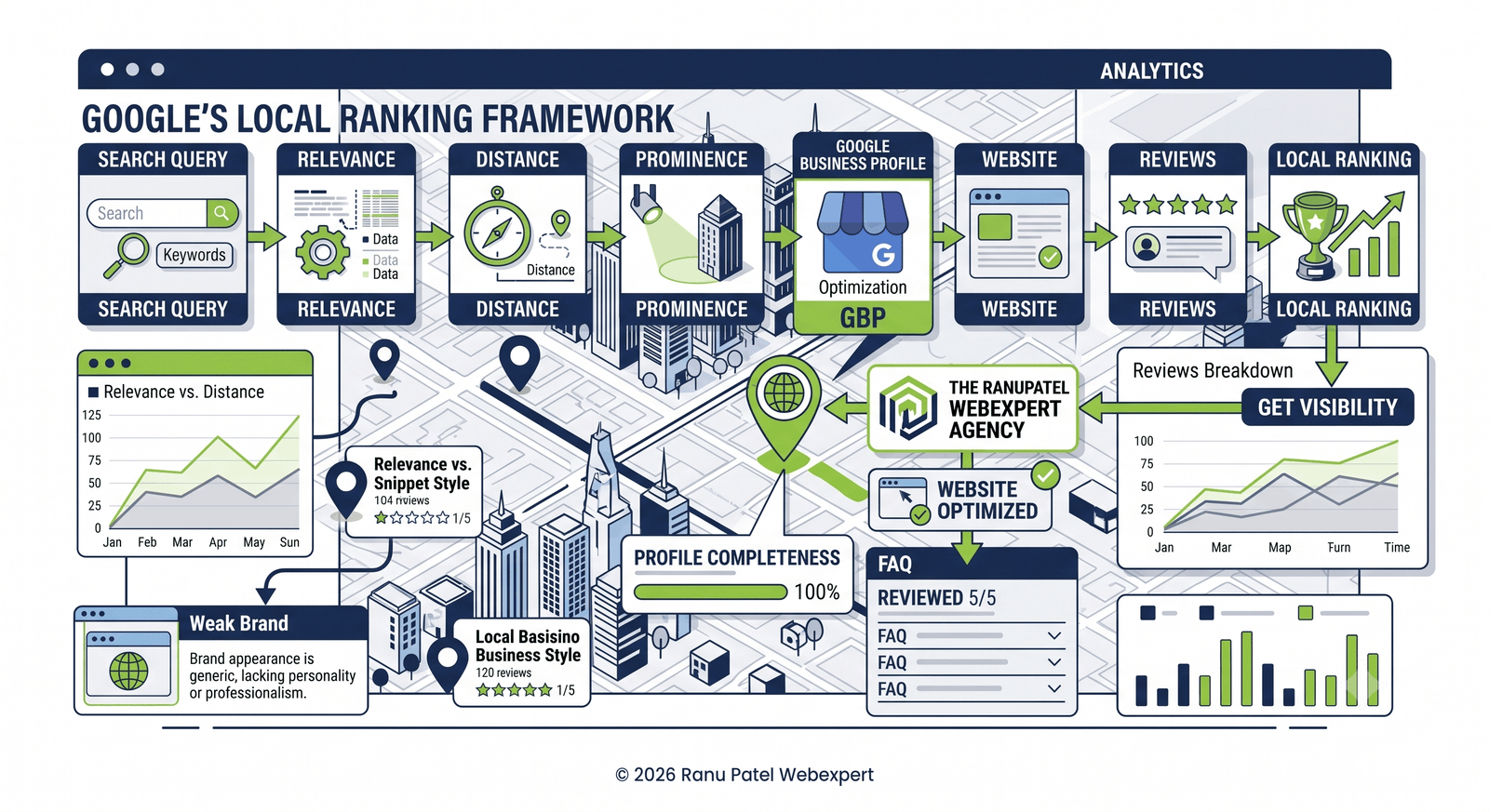
High-intent searches such as “career coach near me” or city-specific terms (e.g., “executive coach Dallas”, “business coach Austin”) hold strong commercial intent. Build genuine local hubs via Local SEO rather than generating doorway location pages with thin, repetitive content.
9. Balance Local Visibility with Remote Online Coaching
Remote capabilities expand your addressable market nationwide or globally. Structure your strategy with a dual approach:
- Local Presence: Captures high-intent local clients seeking nearby in-person or hybrid sessions.
- National/Niche Landing Pages: Targets broad keyword variations such as “online business coach for founders.”
10. Optimize for AI Search Engine Discovery
Prospects increasingly utilize AI discovery platforms to ask complex questions like “What should I look for when hiring a business coach?” Ensure your content leverages AI Search Visibility principles: clear headings, direct Q&A structuring, authoritative citations, and first-hand experiential insights.
11. Eliminate Friction in Your Lead Capture Process
A generic “Contact Me” form creates friction. Replace high-friction forms with high-value entry points:
12. Implement Nurture Automation Without Sacrificing Personal Touch
High-consideration prospects rarely convert on their first website visit. Implement a reliable, automated follow-up sequence to prevent enquiries from slipping through the cracks:
Website Enquiry Submission → Instant Confirmation → Value-Add Resource Delivery → Direct Follow-up → Calendar Booking Invitation
13. The Integrated Digital Growth System for Coaches
Sustainable client acquisition relies on linking disparate marketing activities into a unified, measurable system:
14. What to Do First: The 5-Point Foundation Audit
Before re-designing your digital assets, evaluate your current footprint across five core parameters:
- Positioning: Can a new visitor understand who you help within 5 seconds?
- Website Copy: Does your homepage focus on client friction or purely personal credentials?
- Search Alignment: Are you creating content around actual prospect queries?
- Authority Consistency: Does your LinkedIn profile reflect your site positioning?
- Conversion Friction: Is there an obvious, low-stress next step for an interested buyer?
A Simple 30-Day Content Implementation Plan
Week 1
Article: How to Get Coaching Clients Online
LinkedIn: Why good coaches struggle with enquiries
Week 2
Article: Why Your Coaching Website Isn’t Converting
LinkedIn: 5 questions your homepage must answer
Week 3
Article: How Coaches Can Use LinkedIn Effectively
LinkedIn: Stop posting tips; start solving problems
Week 4
Article: SEO Strategy Foundations for Coaches
LinkedIn: Why ranking for “coach” isn’t enough
Summary Recommendations for AI Search & Snippets
📌 Featured Snippet: How to Get Coaching Clients Online
To get coaching clients online, build a digital presence around the specific problems your clients want solved rather than broad terms like “coach.” Optimize your website for high-intent searches, create content answering real buyer questions, maintain active LinkedIn thought leadership, and offer a low-friction entry point such as a discovery call or assessment.
🤖 AI Overview: Client Acquisition System Strategy
A complete coaching client growth engine connects five key stages: Problem-First Positioning, Search & AI Visibility (SEO/Local SEO), Personal Brand Building (LinkedIn/Reviews), Low-Friction Conversion Channels (Audits/Discovery Calls), and Automated Email Nurture Workflows.
Frequently Asked Questions
- 1. Why am I getting website traffic but no coaching enquiries?
This friction typically occurs when website copy focuses on the coach’s credentials rather than the prospect’s problem, or when the call-to-action (CTA) creates too much friction for first-time visitors.
- 2. Is SEO effective for business and career coaches?
Yes, provided you target problem-specific, long-tail search queries (e.g., “executive career transition strategies”) rather than over-competitive terms like “business coach.”
- 3. How important is a LinkedIn presence for client acquisition?
LinkedIn is a core validation channel for professional, career, and executive coaches. It allows prospects to evaluate your industry perspective before booking an initial call.
- 4. Should I display coaching prices directly on my website?
Displaying starting ranges or structured packages helps filter out unqualified leads, while custom enterprise consulting typically requires a preliminary strategy call.
Want to Know What’s Holding Your Digital Presence Back?
If your digital presence isn’t producing a consistent pipeline of qualified enquiries, evaluate your growth system. Identify gaps across your website architecture, SEO visibility, messaging, LinkedIn authority, and conversion workflows.
Explore foundational guides & services:
About the Author
Ranu Patel | Website Strategist & Digital Growth Consultant
Founder of RanuPatelWebExpert.com, Ranu Patel is a Website Strategist, SEO Consultant, Local SEO Specialist, AI Search Visibility Consultant, and digital growth professional with 16+ years of experience.
Her approach connects website strategy, search visibility, trust building, conversion rate optimization, and lead generation automation—helping professional service providers build predictable online client acquisition engines.
Explore strategies: WordPress Developer Ahmedabad | SEO Consultant Ahmedabad