Your Google Business Profile Isn’t Your Website: Why Local Businesses Need Both to Generate More Enquiries
By Ranu Patel | Webexpert | Last Updated: June 29, 2026 | ~8 min read
Core Strategy
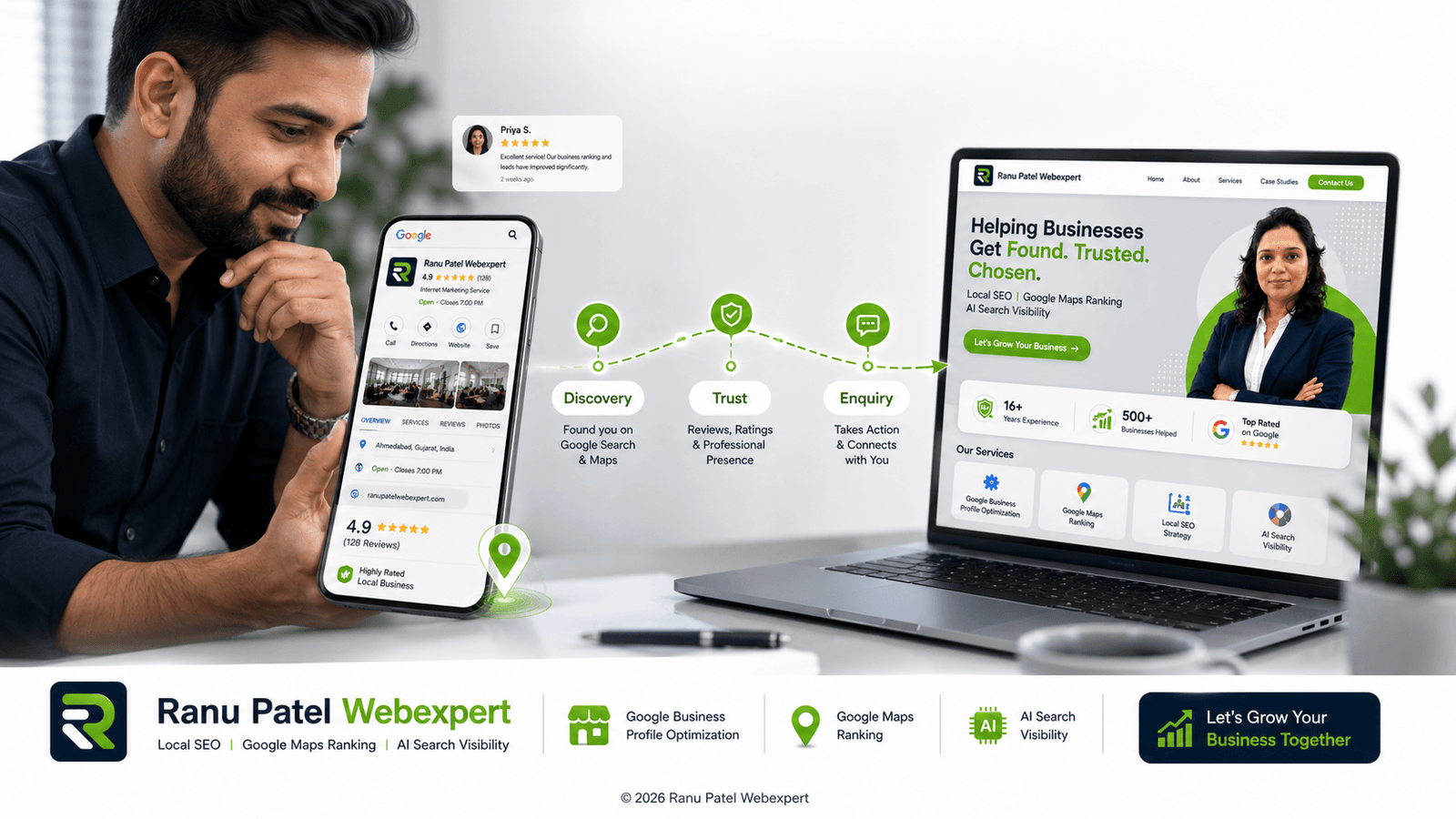
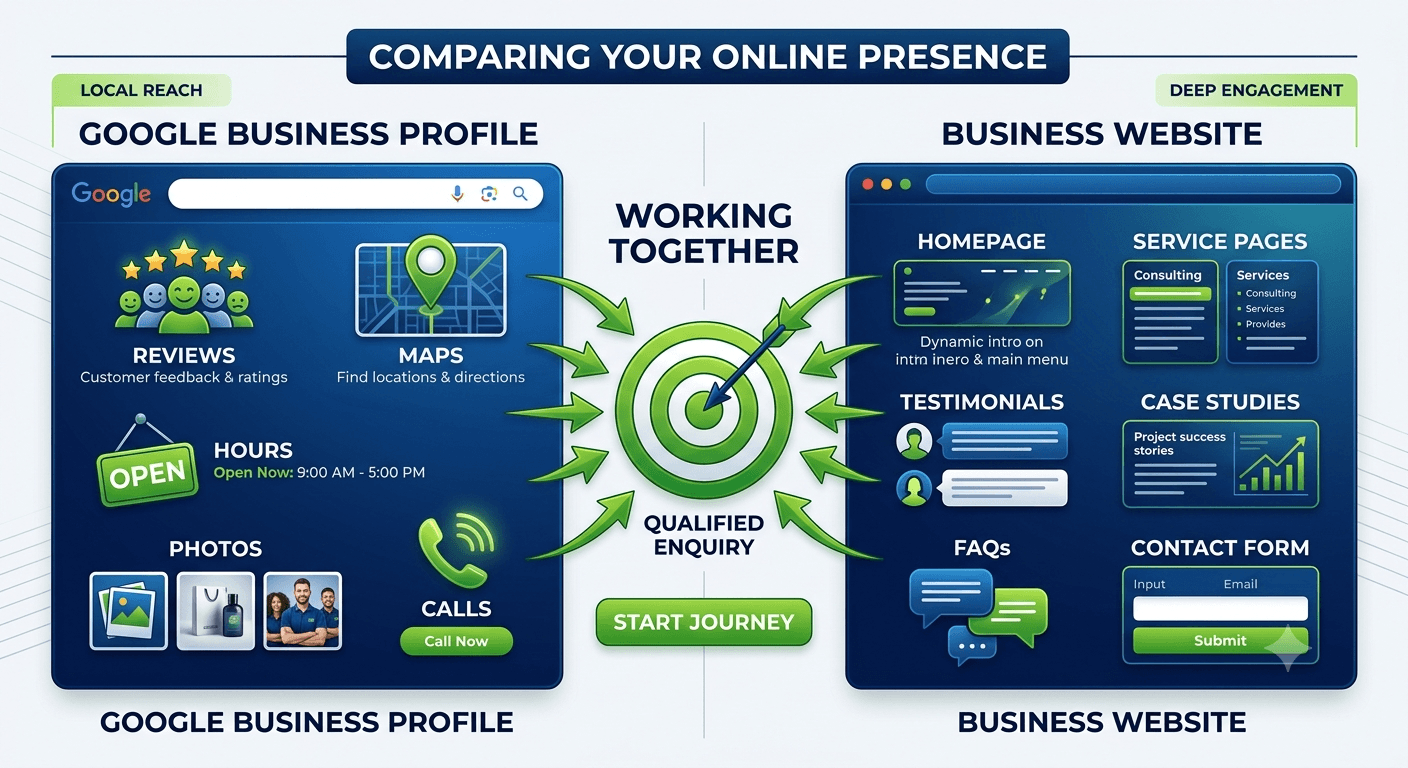
A Google Business Profile helps people discover your business. Your website helps them decide whether they should trust it. Thinking about these two assets separately is one of the biggest missed opportunities in local digital marketing. They are not competitors—they are partners in the exact same customer journey.
If someone discovers your business through Google Maps today, what happens next? Many business owners assume the journey ends with a direct phone call. In reality, that is often only the beginning of a modern evaluation path.
Over the past several years, I’ve noticed a common pattern while reviewing local business platforms: A company invests heavily in improving its Google Business Profile, earns more search visibility, and receives more website clicks—yet actual business enquiries do not increase as expected. The issue usually isn’t visibility. It’s what happens right after the click.
How Customers Actually Search Today
Imagine you are looking for a trusted local professional—an architect, dentist, lawyer, or contractor. You run a quick search on Google. Instead of seeing a simple list of standalone websites, you are presented with a highly interactive ecosystem:
- Google Maps listings & Local Pack maps
- Aggregated business reviews and ratings
- Real-time business hours and location photos
- Frequently asked questions and direct messaging portals
- AI-generated search summaries (for complex local queries)
- Traditional organic website listings
People rarely make an expensive purchasing decision using just one of these isolated elements. Instead, they piece together a cohesive picture of your business from multiple touchpoints before deciding whether to contact you.
The Division of Labor: Profile vs. Website
To maximize your inbound leads, you must understand exactly what each digital asset does best. They handle completely different stages of the local user experience.
| What Google Business Profile Does Well | Where Your Website Builds Trust |
|---|---|
| Proximity & Availability: Answers “Are you nearby?” and “Are you open right now?” instantly. | Problem Alignment: Demonstrates whether you understand the user’s specific problem. |
| Social Proof Baseline: Displays raw aggregate review scores and customer sentiment at a glance. | Deep Expertise: Showcases case studies, step-by-step processes, and contextual client testimonials. |
| The Digital Storefront: Acts as the primary point of discovery for “near me” local queries. | Conversion Framework: Houses custom contact forms, online schedulers, and detailed service guides. |
Visibility Doesn’t Automatically Create Enquiries
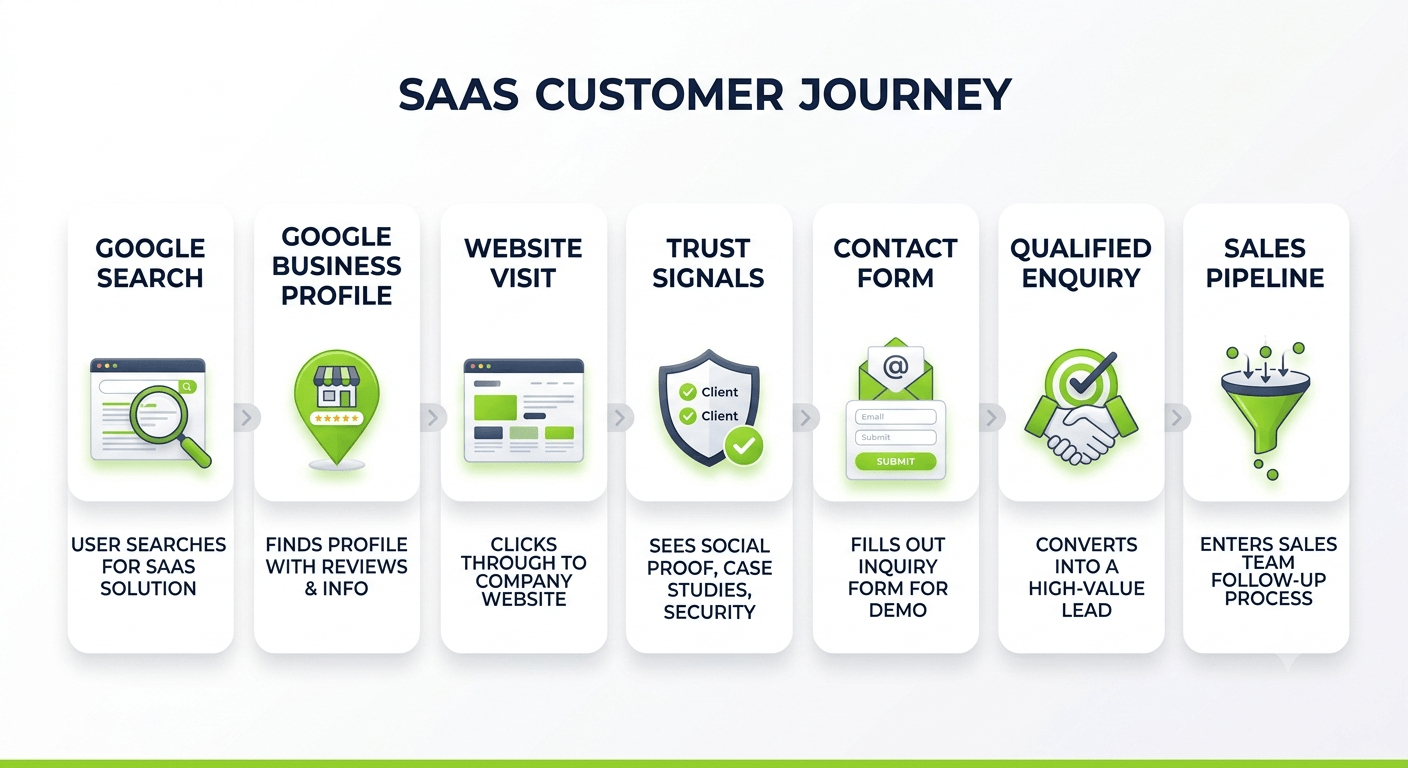
Consider this foundational pipeline: Discovery → Evaluation → Trust → Enquiry. If your website is weak, your lead pipeline breaks right at the evaluation stage—meaning high traffic into an unoptimized site simply results in wasted attention.
Common Mistakes Identified During Website Reviews
When audit data reveals strong Map Pack positions but low phone call volume, the culprit is almost always one of these common website conversion killers:
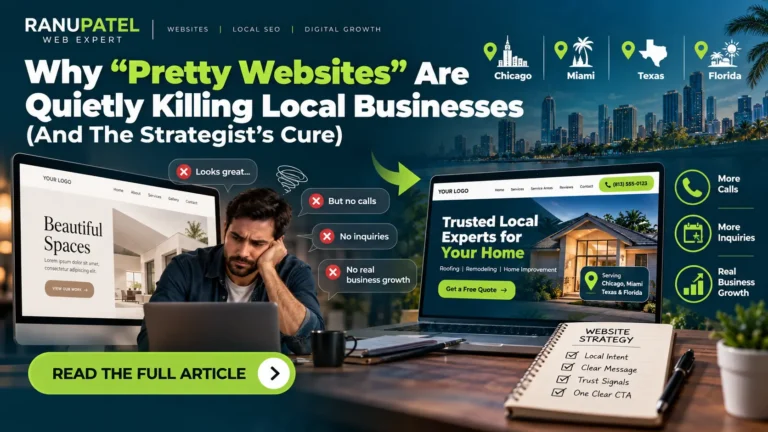
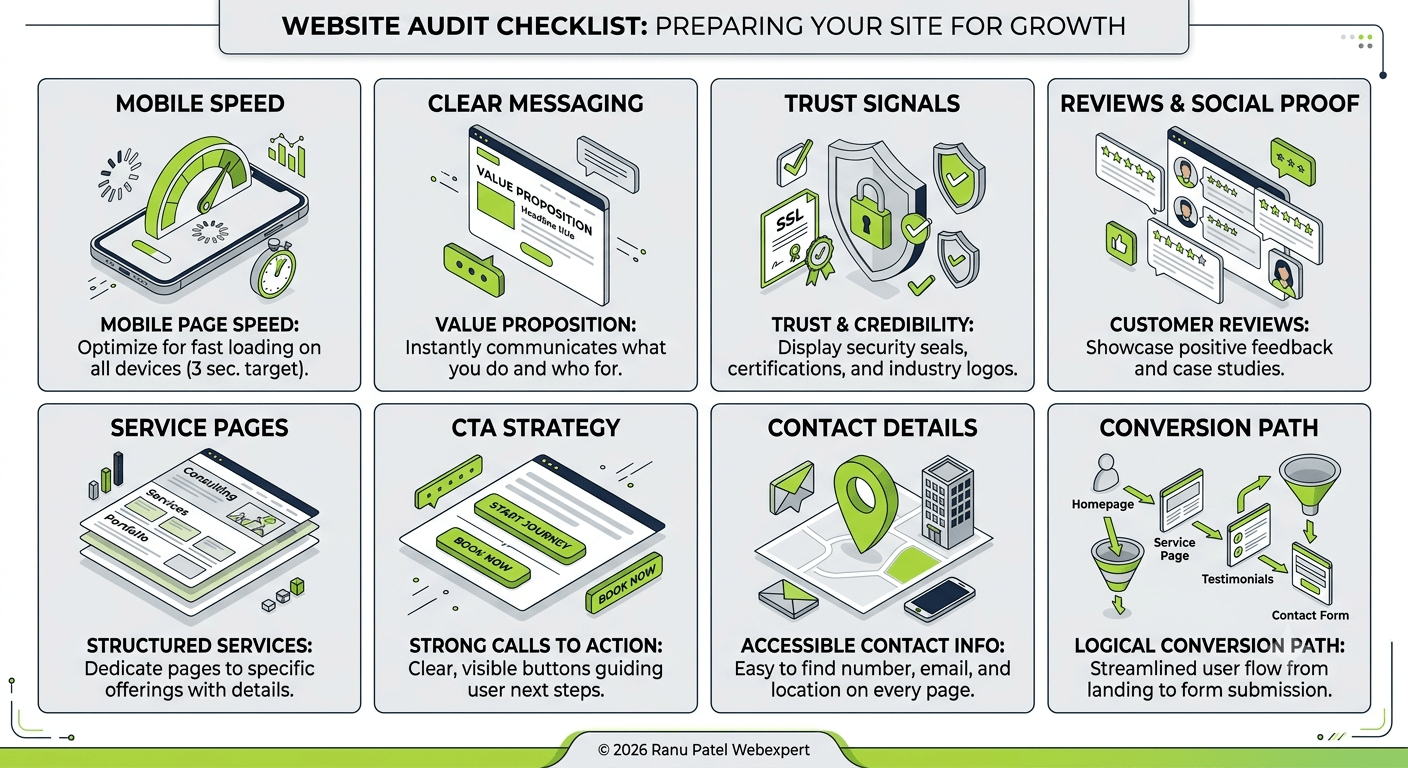
- Unclear Homepage Messaging: Visitors should understand exactly who you help, what you offer, and why they should choose you within three seconds of landing.
- Friction-Filled Mobile Layouts: Because the vast majority of local search intent happens on mobile devices, a sluggish or poorly structured mobile site instantly drives users back to search results.
- Ambiguous Calls to Action (CTAs): Forcing visitors to guess the next step. Phone numbers, quotation forms, and appointment buttons must be completely obvious and accessible.
- Thin Service Pages: Listing your services as a flat, boring bulleted list without expanding on outcomes, timelines, pricing parameters, or structural processes.

Why This Matters Even More in AI Search
Search interfaces are fundamentally changing. Users increasingly receive synthesised answers powered directly by AI search engines. However, this shift does not eliminate the need for a web platform; it radically increases it.
Modern AI engines rely on deep, highly structured data to pull citations and recommend local entities. Businesses that publish clear expertise, transparent consumer answers, and comprehensive local schema signals on their websites are significantly more likely to be fed directly into AI answers.
A Simple Weekly Presence Checklist
Instead of managing these systems independently, run through this simple verification loop once a week to ensure your interconnected pipeline stays functional:
| Asset | Weekly Verification Point |
|---|---|
| Profile | Are hours, contact points, and location details perfectly updated? Have recent reviews received responses? |
| Website | Does the homepage immediately state what we do? Are mobile page speeds optimized? Do CTAs stand out clearly? |
The Bottom Line: Stop asking “How do I rank higher?” and start asking “What experience does a user have after they find my business?” That mental shift is what turns standard traffic metrics into a reliable stream of inbound business revenue.
Frequently Asked Questions
- Is a website still necessary if I have a Google Business Profile?
Yes. A Google Business Profile introduces your brand at the point of discovery, while your website provides the deep structural information required to evaluate capabilities and complete an inquiry. - Does my website affect Google Maps rankings?
Absolutely. Your website’s local relevance, domain authority, structured data schema, and content architecture heavily influence how Google calculates prominence and proximity inside the Maps ecosystem. - What pages should every local business website include?
At a bare minimum, you need a high-intent Homepage, individual core Service Pages, a trust-focused About Page, a Frictionless Contact Page, and a structured layout for customer case studies/testimonials. - Should I focus on Local SEO or website improvements first?
They must progress together. Driving traffic to a broken website wastes ad spend and positioning, while polishing a website that has no underlying search engine visibility yields zero incoming traffic.
Ready to turn local discovery into qualified enquiries?
Get in touch with Ranu Patel Webexpert today to align your Google Business Profile and website into a single, high-converting customer generation engine.
© 2026 Ranu Patel Webexpert | Professional Web Strategy & Local Conversion Optimization.