Aligning Code, Conversion Optimization, and Local Search Architecture
By Ranu Patel | Webexpert | Last Updated: July 2, 2026 | ~11 min read
Introduction
Choosing a WordPress developer is one of the most important decisions you can make for your business website. Many business owners compare developers based on price, turnaround time, or a portfolio of attractive designs. While those factors matter, they rarely determine whether your website will actually help your business grow.
A website is more than a collection of pages. It represents your business, answers customer questions, builds trust, and supports how people discover you through Google Search, Google Maps, referrals, and increasingly, AI-powered search experiences. The right WordPress developer should think beyond design. They should understand how your website fits into your wider business strategy, how visitors move through your site, and how each page supports your goals.
Editor’s Note — Why I Wrote This Guide: Over the past 16+ years, I’ve reviewed and worked on websites for consultants, healthcare professionals, manufacturers, service businesses, and professional firms. This guide is based on practical observations of what helps business websites communicate more clearly, build trust, and support long-term growth.
Over the years, I’ve worked with businesses across different industries and reviewed many websites that looked impressive but struggled to generate enquiries. In many cases, the problem wasn’t the platform—it was the absence of a clear strategy before development began.
This guide explains what a professional WordPress developer should do, the questions worth asking before hiring one, and the practical factors that influence the long-term success of your website.
Why Your Website Is More Than a Digital Brochure
Years ago, a business website was often treated as an online brochure. Today, customer expectations are completely different. Before ever contacting your business, high-intent prospects will typically cross-reference multiple brand touchpoints:
- Navigate directly to your web home base.
- Read comprehensively about your specific services.
- Compare active client reviews across platforms.
- Verify location metrics on your Google Business Profile.
- Browse past project case studies or portfolios.
- Look for transparent pricing models or process breakdowns.
- Evaluate whether your overall online footprint feels authentic and trustworthy.
Every single page contributes heavily to that ultimate conversion decision. A professionally developed WordPress website should help target audiences answer three baseline questions as quickly as possible:
1. What do you do?
2. Who do you help?
3. Why should someone choose your business?
If these core answers are obscured or difficult to parse, visitors will leave without connecting—regardless of how modern or flashy your visual design looks. An elite digital presence successfully balances:
Clear messaging, logical navigation hierarchies, prompt performance speeds, responsive mobile usability, helpful structured content, visible calls to action, distinct trust signals, and zero-friction contact options. The objective isn’t simply to look professional; it is to make it incredibly easy for potential customers to understand your value and take action.
What Does a Professional WordPress Developer Actually Do?
One of the biggest misconceptions in modern web development is that a WordPress expert simply drops text into a pre-built page template. In reality, a true engineering professional impacts the performance of your entire business.
Short Answer:
A professional WordPress developer helps plan, build, optimise, and maintain secure, high-performing websites that explicitly support overarching business goals, intuitive user experiences, and long-term organic search visibility.
Their strategic scope of work should systematically cover several critical areas:
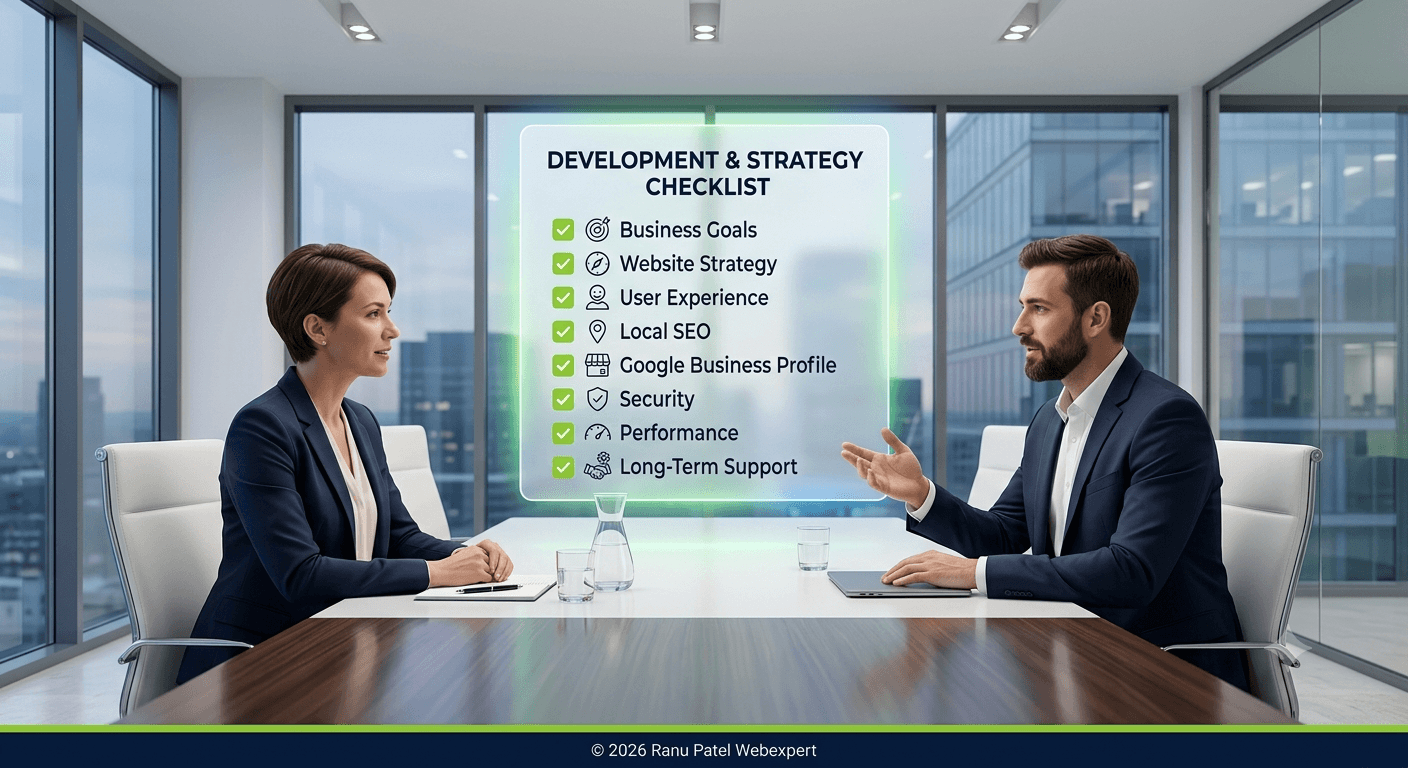
- Understanding Your Business Niche: Before writing any code or discussing layout design options, they master your growth objectives, target customer profiles, local competitive landscapes, and precise pipeline journey.
- Architecting Website Structures: They design intuitive link silos, main navigation headers, descriptive service landing pages, and contextual internal frameworks so that search bots and human buyers can move effortlessly through your site.
- Building for High-End Performance: They monitor clean code execution, asset file optimization, responsive styling layers, server caching techniques, core accessibility targets, and Core Web Vitals parameters.
- Supporting Search Visibility (SEO Foundations): While copy curation and active link-building fall under ongoing marketing execution, the baseline theme build sets your technical limits. Proper configuration dictates clean metadata parsing, canonical search-friendly URLs, fast page generation speeds, and explicit schema markup deployment.
- Thinking Beyond Launch Day: They develop flexible architectures that anticipate scaling adjustments, new content modules, ongoing plugin updates, security monitoring arrays, and analytical user-behavior tracking.
Signs You’re Hiring the Right WordPress Developer
The difference between an average freelancer and a true technical partner shows up in how they communicate during early strategy consultations:
1. They Ask Questions Before Offering Solutions
An expert is naturally curious about your business mechanics. If they immediately quote project rates or flash design mockups without knowing your commercial model or location parameters, they are fitting you into an assembly line.
2. They Focus Heavily on Business Goals
Conversations with elite engineers instinctively circle around pipeline performance metrics—such as qualifying conversion pathways, lowering drop-off margins, integrating Google Business tracking data, and facilitating Local SEO presence—rather than just aesthetics.
3. They Explain Technical Concepts Clearly
You shouldn’t need a computer science degree to navigate your business assets. A great developer communicates in plain language, detailing exactly why a technical decision is made and how it directly benefits your revenue metrics.
4. They Consider the Entire Customer Journey
They construct your platform as one piece of a bigger conversion loop. They carefully consider exactly where your local leads migrate from (such as Maps, organic articles, or direct outreach links) and format target landing zones to fulfill that user intent.
Red Flags to Watch For Before Hiring
Hiring the wrong developer can cost far more than the initial invoice. Redoing an unoptimized, poorly architected framework forces you to waste valuable time, drain financial capital, and forfeit high-value inbound business opportunities. Watch closely for these recurring structural warning signs:
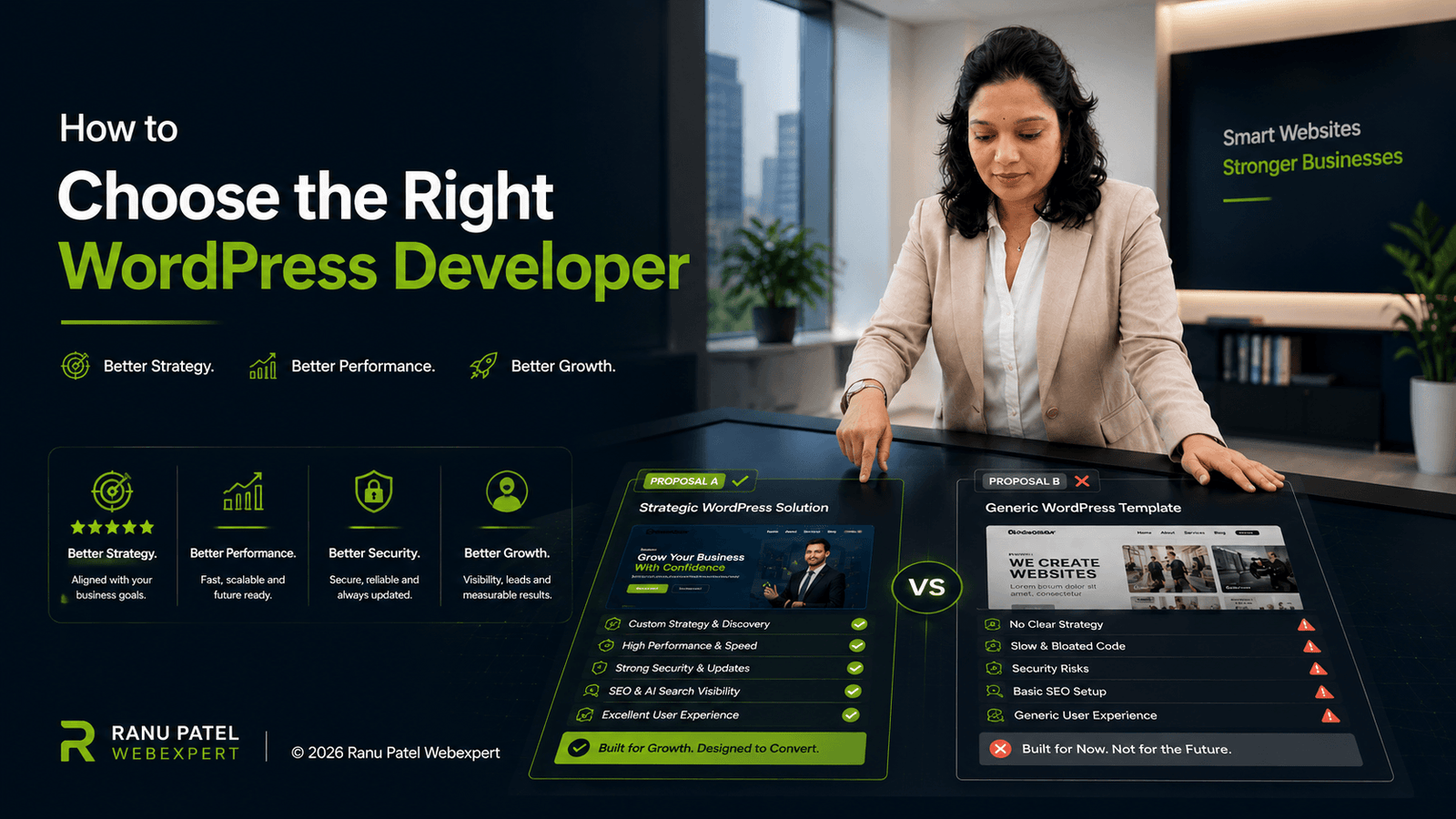
- They Discuss Visual Design Before Strategy: If a developer focuses entirely on animations, stock graphics, or template themes without understanding your services or conversions, they are prioritizing surface-level looks over real business outcomes.
- They Guarantee Instant #1 Search Engine Rankings: Algorithms use hundreds of fluid variables. No ethical developer or search marketer can guarantee precise immediate positioning. Run from absolute ranking promises.
- They Avoid Confirming Direct Website Ownership: You must always retain absolute root ownership of your primary digital real estate—including your domain registry, clean cloud hosting environments, database repositories, and administrator credentials.
- They Treat Platform Speed as an Afterthought: Beautiful pages that crawl on mobile viewports destroy your conversion rates. Speed and Core Web Vitals metrics must be engineered directly into the core theme logic from day one.
- They Don’t Account for Future Scalability: Your company will grow. If your setup is structured so tightly that adding a new location page or service guide breaks the interface, you are trapped in a fragile environment.
Questions to Ask Before Signing a Contract
Pose these explicit practical questions to screen candidates during your initial discovery phone calls:
- How do you learn about my business before starting? Look for a structured discovery framework, comprehensive onboarding questionnaires, or deep competitive research.
- Will you review my existing website? An audit identifies what structural elements are working well so you can preserve your current search value instead of wiping it out.
- How will the website support SEO? Look for specific tactical mentions of semantic site architectures, logical internal linking structures, clean metadata parsing, and mobile optimization.
- How will visitors contact my business? Ensure they map out clear conversion paths, prominent click-to-call numbers, responsive enquiry forms, and automated confirmation steps.
- Can I update the website content myself? The system must be configured to let you update basic text, service profiles, blogs, and images without needing a developer for minor changes.
- What happens after the initial launch? Seek clear parameters surrounding ongoing core updates, plugin compatibility management, cloud backups, and regular security scanning.
Why Website Strategy Matters More Than Design
Many business owners falsely believe that launching an attractive website automatically drives qualified enquiries. However, design alone rarely influences commercial growth. Think carefully about your own online browsing behavior: when looking for a professional vendor, you prioritize clarity, proof, and access over animations.
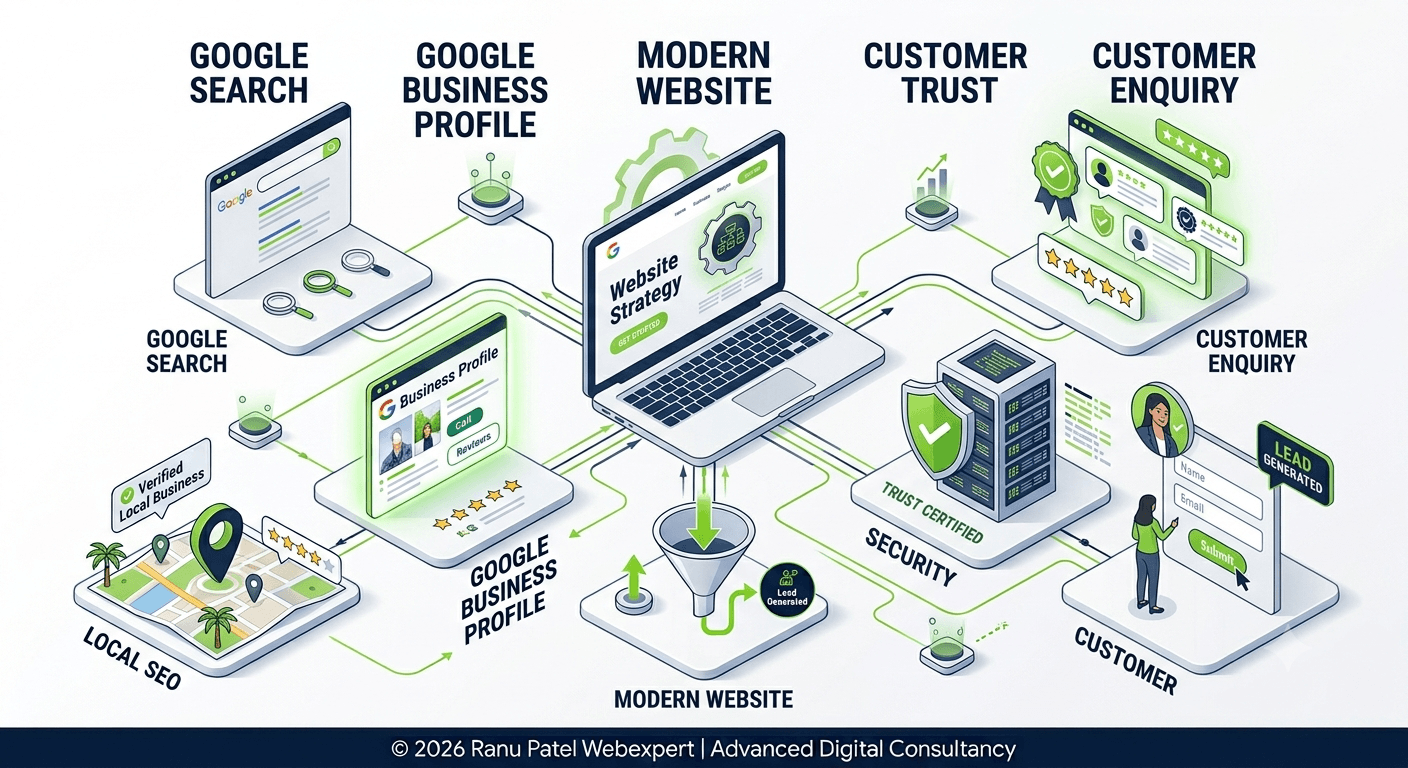
Strategic conversion engineering concentrates on guiding users smoothly through each step of the buyer journey:
Every step supports the next. This is exactly why custom web development, Local SEO mapping, Google Profile configurations, and on-page conversion signals must be built to work together as one cohesive customer acquisition funnel.
How WordPress Supports SEO and Local SEO
WordPress itself does not magically rank your company on top of search networks. However, when configured properly by an expert, it provides a highly flexible framework to build an optimized technical foundation. A clean WordPress setup easily accommodates canonical site architectures, prompt indexing pathways, custom schema microdata, responsive CSS grids, and frictionless content management systems.
Website Ownership, Security & Maintenance
Deploying your site is simply the first milestone. Protecting your business requires proactive maintenance. This means executing regular plugin compatibility updates, applying firewalls against malware threats, keeping automated cloud backups, monitoring Core Web Vitals data via Search Console, and updating old pricing data or client testimonials to maintain accuracy and user trust.
Pre-Hiring 30-Minute Website Audit Checklist
| Strategic Audit Question | Yes | No |
|---|---|---|
| Is the headline and homepage message instantly clear? | ☐ | ☐ |
| Is the website fluidly mobile-friendly on smartphones? | ☐ | ☐ |
| Can visitors identify your contact details and form fields easily? | ☐ | ☐ |
| Are your core service offerings distinct and thoroughly explained? | ☐ | ☐ |
| Are genuine client reviews or testimonials easily visible? | ☐ | ☐ |
| Is the mobile page generation speed snappy and acceptable? | ☐ | ☐ |
| Is the header menu simple, clean, and free of clutter? | ☐ | ☐ |
| Does every page serve an explicit business or user purpose? | ☐ | ☐ |
| Is your active Google Business Profile clearly linked? | ☐ | ☐ |
| Can your team easily update text modifications on the fly? | ☐ | ☐ |
Final Thoughts
Choosing a WordPress developer is about more than finding someone who can build a website. The right partner should understand your business, explain their recommendations clearly, and create a website that supports long-term growth.
A successful website helps people discover your business, understand your services, trust your expertise, and take the next step. Rather than asking, “Who is the cheapest developer?”, consider asking: “Who understands my business well enough to build a website that genuinely supports it?” That question often leads to better decisions—and better results.
Frequently Asked Questions
- What does a WordPress developer do?
A WordPress developer plans, builds, customises, and maintains WordPress websites. Beyond writing code, they should understand website strategy, user experience, performance, security, and how the website supports your business goals. - What’s the difference between a WordPress designer and a WordPress developer?
A designer focuses primarily on visual appearance and layout, while a developer works on functionality, performance, integrations, security, and technical implementation. Many professionals offer both skills, but understanding the distinction helps you choose the right partner. - How do I choose the right WordPress developer?
Look beyond price and portfolios. Ask about their discovery process, how they understand your business, their approach to website strategy, Local SEO, performance, security, maintenance, and long-term support. - Should I hire a freelancer or an agency?
Both can be suitable. A freelancer often provides direct communication and flexibility, while an agency may offer a broader team. The right choice depends on your project scope, budget, and preferred working style. - Can WordPress help my business grow?
WordPress provides a flexible platform for creating websites that support marketing, lead generation, Local SEO, content publishing, and customer engagement. The platform alone does not guarantee results; the overall strategy and implementation matter most. - Is WordPress good for SEO?
WordPress can support SEO when combined with clear site architecture, fast performance, quality content, internal linking, structured data, and regular maintenance. - How important is mobile responsiveness?
Very important. Many visitors discover businesses using smartphones. A responsive website improves usability, accessibility, and the overall customer experience. - Does page speed matter?
Yes. Faster websites generally provide a better experience for visitors and reduce the likelihood of people leaving before exploring your services. - Should my developer also understand Local SEO?
If your business serves customers in specific locations, understanding Local SEO and Google Business Profile can help ensure the website supports local visibility from the beginning. - What should every business website include?
A clear homepage, detailed service pages, About page, contact information, customer testimonials, frequently asked questions, calls to action, privacy policy, and a blog or resource section. - Can I update my WordPress website myself?
Most WordPress websites allow business owners to update text, images, blog posts, and basic pages without advanced technical knowledge. - How often should a business website be updated?
Review your website every three to six months. Update services, testimonials, team information, contact details, and publish fresh educational content regularly. - How does a website support Google Business Profile?
Your Google Business Profile helps customers discover your business, while your website provides detailed information, builds trust, and supports the decision to contact you. Both should work together. - What is Website Strategy?
Website Strategy is the process of planning how your website supports business goals, customer needs, search visibility, and conversions—not just how it looks. - Why is Website Strategy more important than design?
A visually attractive website may still perform poorly if visitors cannot understand your services, navigate easily, or find a clear next step. Strategy ensures the design supports business objectives. - Can AI Search change how websites are discovered?
AI-powered search is increasingly using structured information, helpful content, and trusted sources to answer user questions. Businesses that publish clear, experience-based content and maintain consistent online information are better positioned for these evolving search experiences.
Ready to engineer a high-intent WordPress environment built for commercial growth?
Begin by building a solid strategy rather than worrying about visual aesthetics. Check out my strategic modules on Website Strategy, Local SEO blueprints, and Google Business Profile configurations to turn search traffic into revenue.
Consult with a Strategy-First Developer →© 2026 Ranu Patel Webexpert | Custom WordPress Engineering, Intent-Driven Conversion Layouts & Local Search Architecture. All rights reserved.