Introduction
The Future of AI Search, GEO Optimization, and Business Visibility
Artificial intelligence is changing how people discover businesses online.
Instead of scrolling through ten blue links on a search engine, users are now asking AI tools direct questions like:
- “Who is the best local SEO expert in Dallas?”
- “Which dentist near me has the best reputation?”
- “Who can help small businesses rank in Google AI Overviews?”
- “What’s the best web design agency for lawyers?”
And increasingly, tools like ChatGPT, Google AI Overviews, and Perplexity AI are providing direct answers instead of traditional search results.
That shift is transforming SEO forever.
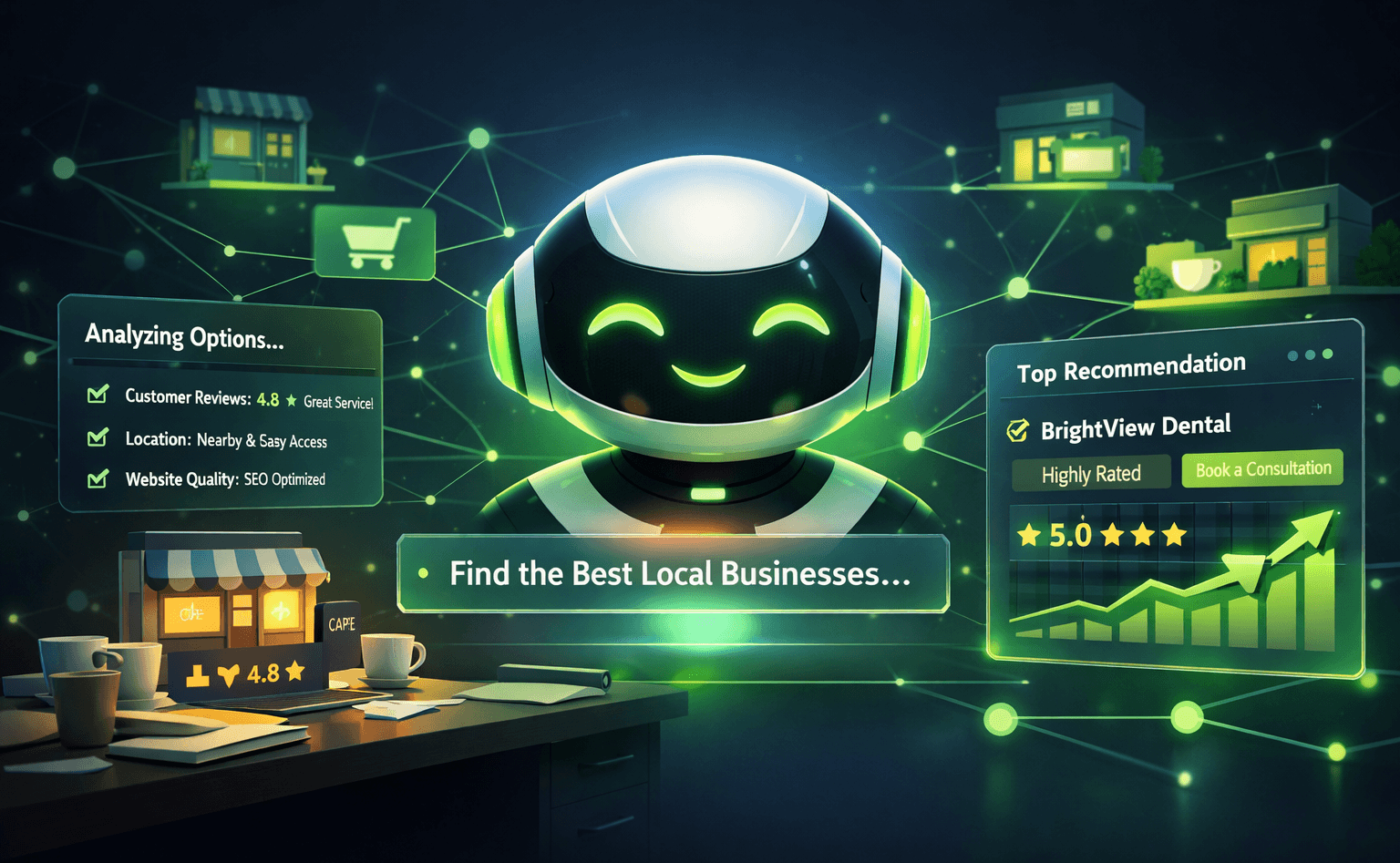
Businesses are no longer competing only for rankings. They are competing for recommendations.
The real question is:
Why does ChatGPT recommend some businesses while ignoring others?
The answer involves AI search optimization, semantic SEO, entity authority, EEAT signals, and digital trust systems that most businesses still do not fully understand.
This guide breaks down exactly how AI systems choose businesses to recommend — and how you can position your brand for better AI visibility.
Why AI Recommendations Matter More Than Rankings
Traditional SEO focused on one primary goal:
Rank higher in search results.
AI search changes the objective completely.
Now the goal is:
Become the most trusted and contextually relevant answer.
That difference is massive.
When someone asks AI for the “best” service provider, consultant, agency, or local business, the AI system evaluates credibility, authority, semantic relevance, and trust signals before generating recommendations.
This means businesses with strong authority signals can appear in AI-generated answers even if they are not ranking #1 in Google.
At the same time, businesses with weak authority or poor digital trust may disappear entirely from AI-driven discovery.
How ChatGPT Finds Business Information
Contrary to popular belief, AI systems do not randomly choose businesses.
Modern AI retrieval systems analyze large amounts of publicly available information from across the web.
These systems evaluate:
- website content
- structured data
- expert mentions
- review platforms
- local business profiles
- citations
- topical authority
- semantic relationships
- authoritative sources
AI systems attempt to understand:
- who your business is
- what services you provide
- where you operate
- whether people trust you
- whether your expertise is recognized online
This is where semantic SEO and entity optimization become extremely important.
The Core Factors ChatGPT Uses to Recommend Businesses
1. Authority and EEAT Signals
One of the biggest influences on AI recommendations is EEAT.
AI systems increasingly prioritize businesses that demonstrate:
- real-world experience
- expertise
- consistent publishing
- trusted reputation
- transparent information
- authority within a niche
For example, a local SEO consultant publishing high-quality educational content regularly will likely appear more trustworthy than a website with thin sales copy and no expertise signals.
Strong EEAT Signals Include:
- detailed expert articles
- author bios
- case studies
- testimonials
- transparent business information
- media mentions
- niche authority
- educational resources
Businesses that build digital trust consistently are more likely to appear in AI-generated recommendations.
2. Entity Recognition and Semantic SEO
AI systems do not think like traditional search engines.
They rely heavily on entities and semantic relationships.
An entity is a clearly identifiable concept, person, company, brand, or topic.
For example:
- OpenAI
- Knowledge Graph
- Semantic SEO
When AI systems repeatedly see your business associated with certain topics, industries, and locations, they gain confidence in your expertise.
For example, if your business consistently publishes content about:
- AI SEO
- Google AI Overviews
- local SEO
- GEO optimization
- semantic search
- conversational SEO
AI systems begin connecting your brand with those entities.
This increases your probability of appearing in related AI-generated answers.
3. Topical Authority
Publishing one article about AI SEO is not enough anymore.
AI systems reward topical ecosystems.
This means businesses that cover an entire topic deeply tend to build stronger AI visibility.
For example, a business publishing content on:
- AI search optimization
- conversational SEO
- Google AI Overviews
- entity SEO
- AI discoverability
- local AI visibility
- structured data
- semantic content
creates a much stronger authority footprint than a business publishing scattered unrelated blogs.
Topical depth helps AI systems understand:
- your specialization
- your expertise
- your authority within a niche
This is why content clusters are becoming essential for GEO optimization.
4. Structured Data and Schema Markup
AI systems rely heavily on structured information.
Schema markup helps machines understand your content more clearly.
Important schema types include:
- Article schema
- FAQ schema
- LocalBusiness schema
- Person schema
- Organization schema
- Review schema
Schema improves:
- semantic clarity
- AI retrieval accuracy
- contextual understanding
- entity relationships
Businesses without structured data are often harder for AI systems to interpret confidently.
5. Reputation and Trust Signals
AI recommendation systems evaluate trust beyond your website.
They analyze:
- reviews
- testimonials
- third-party mentions
- business citations
- local directories
- industry recognition
- backlinks
- customer sentiment
A business with:
- strong Google reviews
- consistent local citations
- positive reputation signals
- authoritative backlinks
is far more likely to appear trustworthy to AI systems.
This is especially important for local businesses.
How Local SEO Influences AI Recommendations
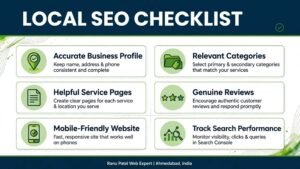
Local SEO is becoming deeply connected with AI search visibility.
When users ask:
- “best dentist near me”
- “top lawyer in Dallas”
- “best roofing company in Miami”
AI systems evaluate local trust indicators before making recommendations.
These signals include:
- Google Business Profile optimization
- NAP consistency
- review quality
- review velocity
- location relevance
- local backlinks
- local citations
- service-area authority
Businesses with stronger local trust ecosystems are more likely to appear in AI-generated local recommendations.
Why Conversational SEO Matters Now
AI search is conversational.
Users no longer search only with keywords like:
- “SEO agency Dallas”
Now they ask:
- “Who can help my business appear in Google AI Overviews?”
- “What’s the best local SEO strategy for dentists?”
- “Which SEO expert understands AI search optimization?”
This changes how businesses should create content.
Conversational SEO focuses on:
- natural language
- question-based content
- semantic context
- direct answers
- AI-friendly formatting
Content optimized for conversational search is easier for AI systems to retrieve and summarize.
Traditional SEO vs AI Search Optimization
| Traditional SEO | AI Search Optimization |
|---|---|
| Keyword rankings | Trusted recommendations |
| Backlinks | Entity authority |
| Search volume | Contextual relevance |
| Page optimization | Topical ecosystems |
| SERP visibility | AI discoverability |
| Click-focused | Answer-focused |
Traditional SEO still matters.
But AI search introduces an additional layer focused on semantic trust and contextual authority.
Businesses now need both.
Common Reasons Businesses Never Appear in AI Recommendations
Many businesses struggle with AI visibility because they lack foundational authority signals.
Common Problems Include:
- thin website content
- no topical authority
- inconsistent branding
- weak local SEO
- poor reviews
- no schema markup
- limited digital trust
- no expert authorship
- weak entity associations
- outdated SEO strategies
If AI systems cannot confidently understand or trust your business, recommendations become unlikely.
How Businesses Can Improve Their AI Visibility
1. Build Topic Clusters
Create interconnected content around:
- AI SEO
- GEO optimization
- local SEO
- semantic SEO
- conversational search
- AI discoverability
2. Strengthen EEAT Signals
Add:
- expert author bios
- case studies
- testimonials
- transparent company details
- educational content
3. Optimize for Entities
Ensure your brand is consistently associated with your target topics across:
- your website
- directories
- guest articles
- podcasts
- social media
4. Improve Structured Data
Implement:
- FAQ schema
- Article schema
- LocalBusiness schema
- Organization schema
5. Focus on Conversational Search
Answer real user questions naturally.
Use:
- FAQs
- conversational headings
- concise explanations
- semantic keyword relationships
The Future of SEO Is AI Visibility
The future of digital visibility is no longer limited to search rankings.
AI systems are becoming recommendation engines.
Businesses that build:
- authority
- trust
- topical depth
- entity recognition
- semantic relevance
will dominate the next generation of search visibility.
Those relying only on outdated keyword tactics may slowly disappear from AI-driven discovery.
This is why GEO optimization, conversational SEO, entity SEO, and AI search strategy are becoming essential for modern businesses.
Expert Insight from Ranu Patel
As AI-powered search evolves, businesses need more than traditional SEO.
They need:
- AI visibility strategies
- semantic authority
- structured topical ecosystems
- conversational content
- entity optimization
The businesses that win in AI search will not necessarily be the loudest.
They will be the most trusted, most contextually relevant, and most semantically understood.
That is where the future of SEO is heading.
Frequently Asked Questions
Can ChatGPT recommend local businesses?
Yes. AI systems increasingly provide local business suggestions based on authority, relevance, reviews, trust signals, and semantic understanding.
Does SEO still matter for AI search?
Absolutely. Traditional SEO still provides foundational authority signals, but AI search also evaluates entities, EEAT, topical authority, and conversational relevance.
What is GEO optimization?
GEO stands for Generative Engine Optimization. It focuses on improving visibility inside AI-driven search systems like ChatGPT, Google AI Overviews, and Perplexity.
How important are reviews for AI visibility?
Reviews are extremely important because they influence trust, reputation, and local authority signals that AI systems evaluate.
Does schema markup help AI systems?
Yes. Structured data helps AI systems understand your business, services, expertise, and content more accurately.
Final Thoughts
AI search is fundamentally changing how businesses get discovered online.
The shift from rankings to recommendations is already happening.
Businesses that invest early in:
- semantic SEO
- GEO optimization
- topical authority
- EEAT
- conversational search optimization
- entity SEO
will gain a major competitive advantage as AI-driven discovery continues to grow.
The future belongs to businesses that AI systems can confidently trust and recommend.
Ready to Improve Your AI Visibility?
If your business is not appearing in AI-driven search experiences like:
- ChatGPT
- Google AI Overviews
- Perplexity AI
you may already be losing visibility to competitors who are optimizing for AI search.
Book an AI Visibility Strategy Session with Ranu Patel and discover how GEO optimization, entity SEO, and conversational search strategies can position your business for the future of AI-powered discovery.