A Complete Guide to Local SEO & Google Business Profile Rankings
By Ranu Patel | Founder & Website Strategist | Experience: 16+ Years | Updated: July 2026 | ~14 min read
Executive Summary: Google does not recommend local businesses at random, nor does it strictly favor the largest companies with the biggest advertising budgets. Instead, Google evaluates hundreds of real-time signals centered around three documented core pillars: Relevance, Distance, and Prominence. Based on 16+ years of real-world Local SEO audits, this comprehensive guide explores how Google’s local algorithm works, why your website directly influences your Google Business Profile (GBP) map rankings, and actionable steps to build sustainable, high-converting local visibility.
Google Doesn’t Recommend the “Biggest” Business
Many business owners assume that Google automatically highlights the oldest company, the largest firm, or the business with thousands of paid reviews. In reality, Google’s singular objective for local queries is straightforward: Show the business most likely to satisfy the searcher’s immediate intent.
Every local search carries unique intent. A customer searching for “Website Designer Ahmedabad” receives different Map Pack recommendations than someone searching “WordPress Developer Near Me”—even if both queries originate from the exact same street corner. Google evaluates what the user needs, where they are situated, which profiles demonstrate verified expertise, and which websites provide matching, trustworthy information.
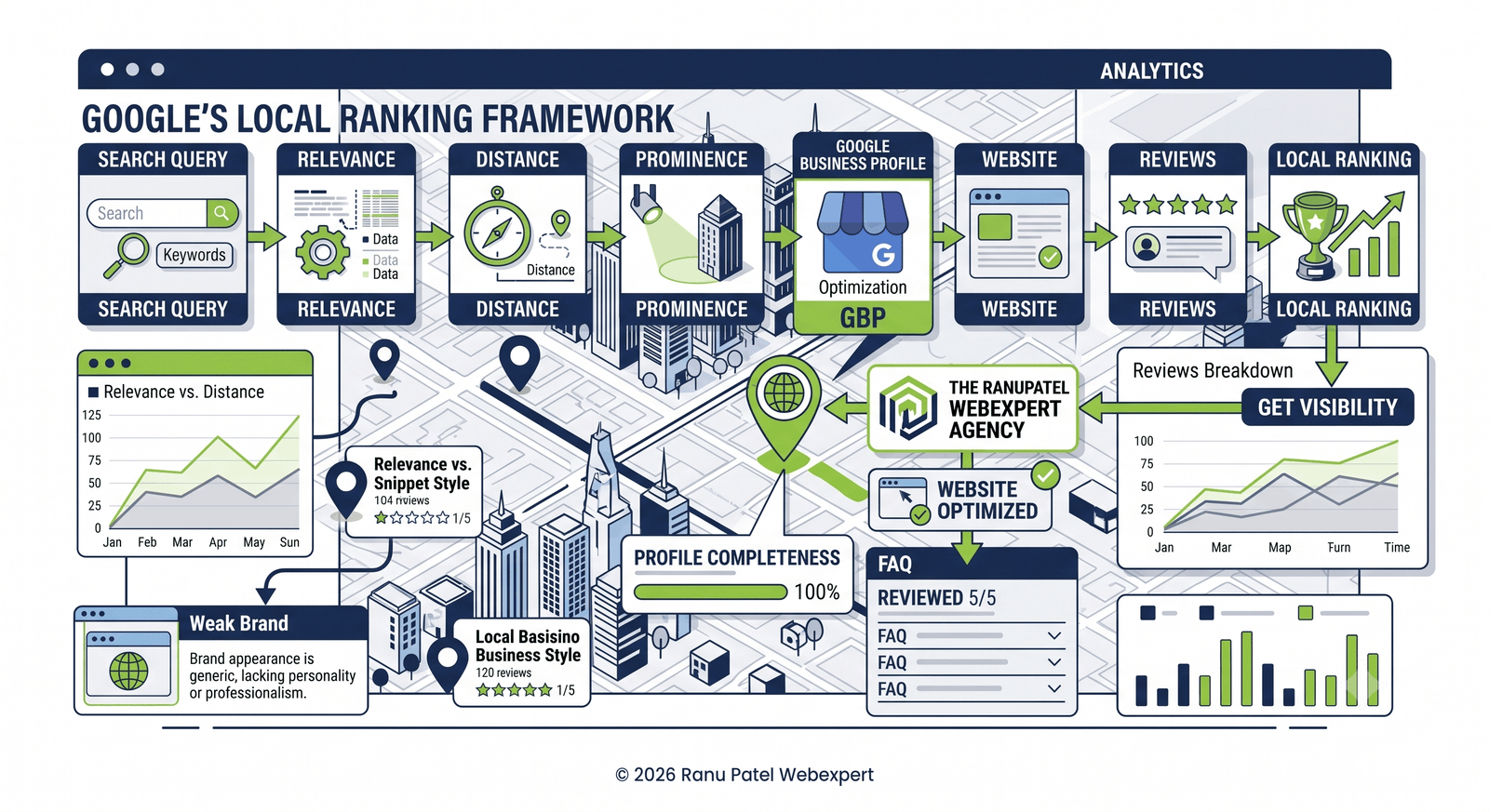
Google’s Three Core Local Ranking Factors
Google publicly confirms that local rankings are governed by three primary pillars. Understanding how these factors interact is essential for building a long-term Local SEO strategy:
1. Relevance
How closely your business profile and website content match what the user is searching for. Powered by categories, service descriptions, and localized website copy.
2. Distance
The physical proximity between the searcher (or explicitly stated geographic boundary) and the verified business location or designated service area.
3. Prominence
How well-known, authoritative, and trusted your business appears online, calculated via reviews, directory consistency, backlink authority, and local mentions.
“A business 5 kilometers away with specialized service pages, structured schema data, and authentic customer feedback will routinely outrank a generalist business located 1 kilometer away.”
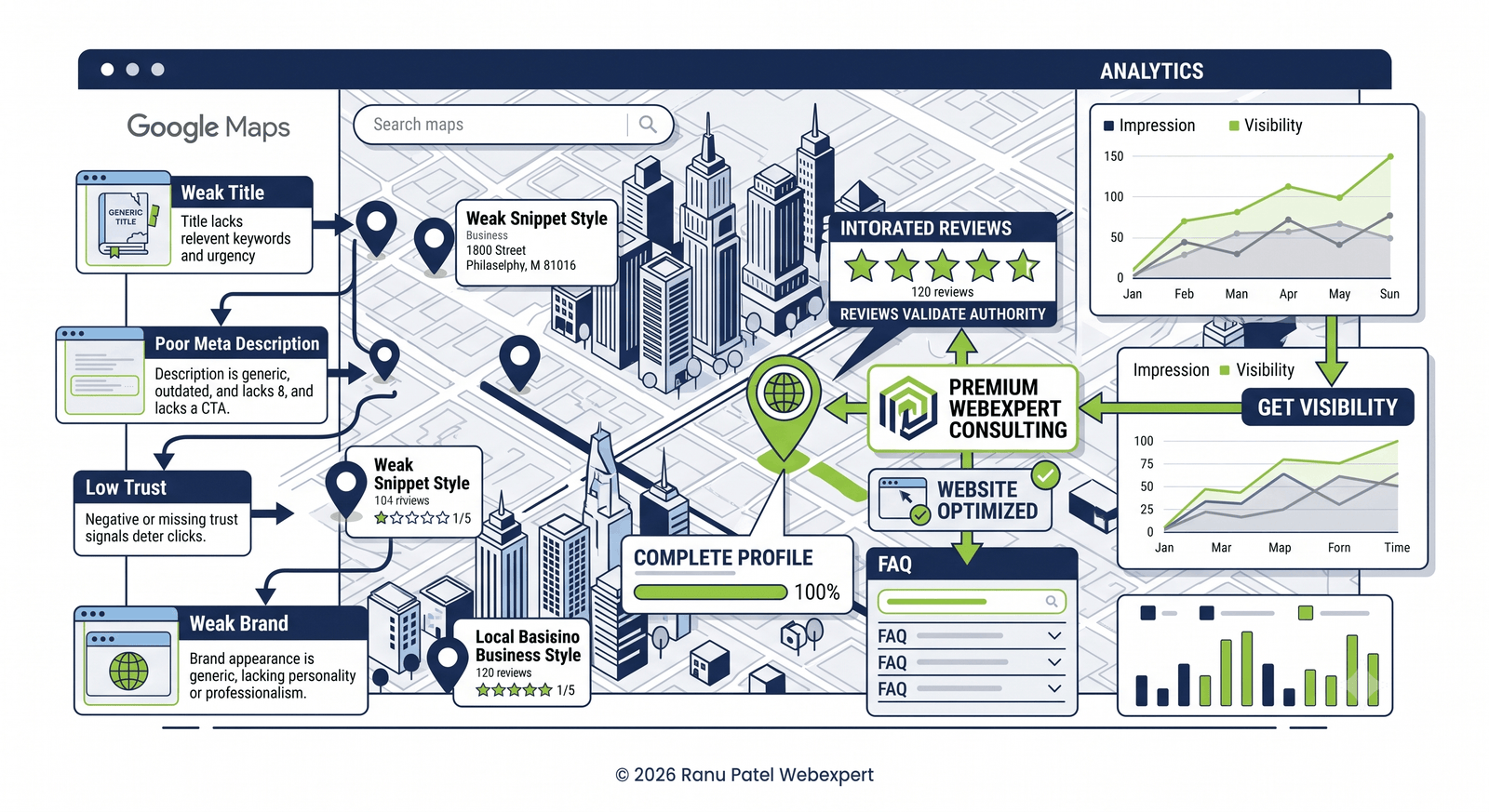
Why Your Website Directs Your Local Map Pack Rankings
A common misconception in Local SEO is treating Google Business Profile as an isolated entity. In reality, Google’s algorithms constantly cross-examine your business profile against your linked website landing pages to validate your authority.
| Isolated GBP Profile (Low Authority) | Integrated GBP + Website Ecosystem (High Rank Potential) |
|---|---|
| Generic Setup: Basic business name, primary category selected, but links to a single-page website with thin service descriptions and no dedicated location data. | Optimized Architecture: GBP linked to dedicated service landing pages featuring granular service offerings, customer FAQs, local case studies, embedded map schema, and consistent NAP metrics. |
Author Insight: During audits, I frequently find business owners focusing exclusively on collecting stars while leaving their website completely unoptimized. Your Google Business Profile attracts interest, but your website provides the deep contextual proof Google needs to confidently recommend you.
15-Step Practical Framework to Increase Local Visibility
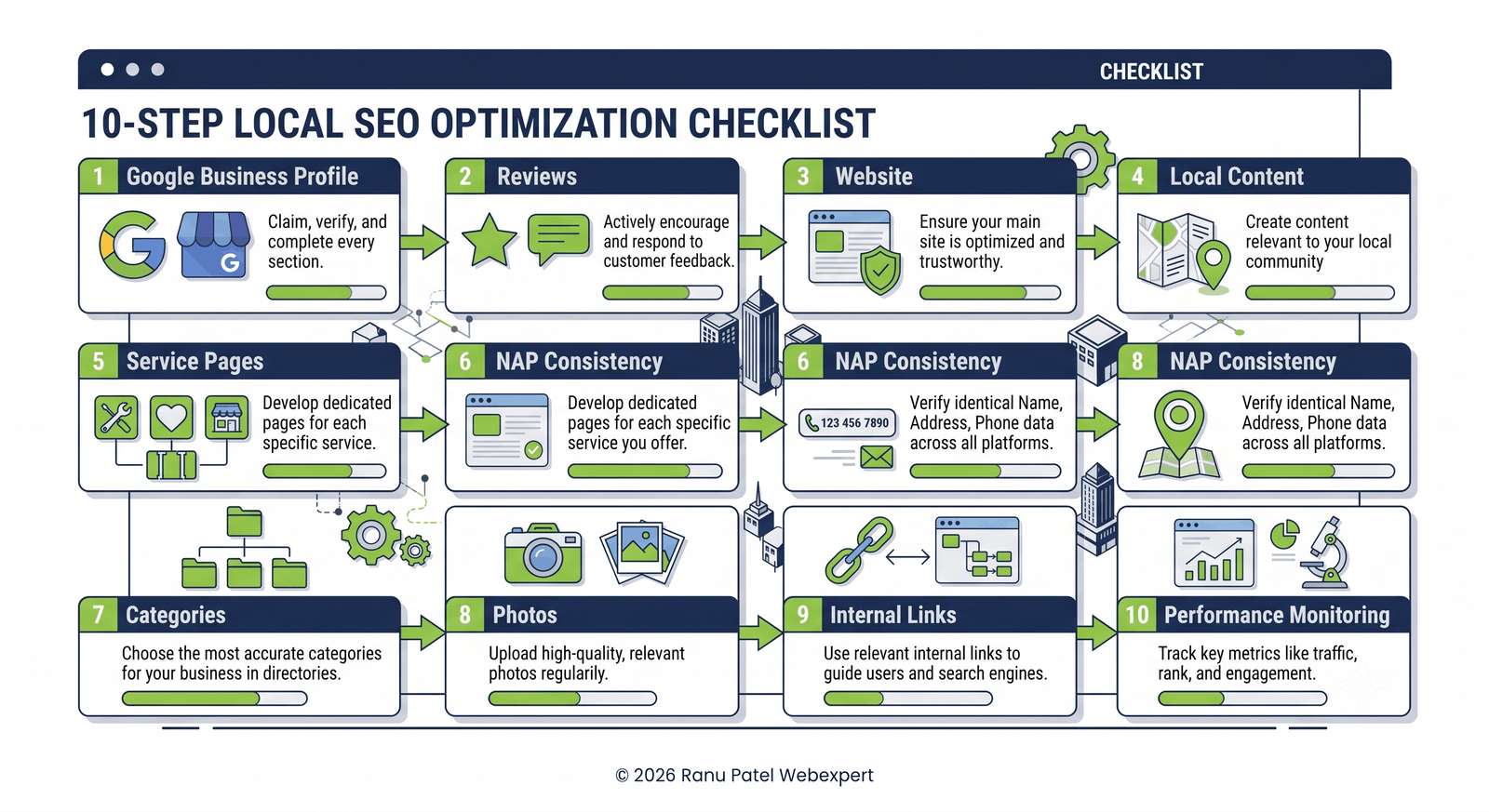
To sustainably rank in Google’s Local Pack and Maps without resorting to risky tactics, execute this strategic checklist:
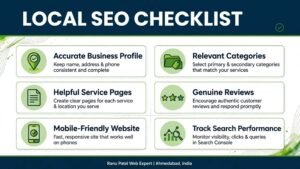
The Complete Local Visibility Checklist
- 1. Profile Completeness: Fill every single GBP attribute.
- 2. Strategic Categories: Select primary & accurate secondary categories.
- 3. NAP Consistency: Ensure Name, Address, Phone match across web citations.
- 4. Dedicated Service Pages: Build individual web pages per major service.
- 5. Granular Local Content: Publish localized case studies and customer FAQs.
- 6. Continuous Feedback Loop: Systematically earn authentic customer reviews.
- 7. Active Review Responses: Professional engagement with positive/negative reviews.
- 8. Visual Proof: Upload geo-tagged, high-resolution project/team photos.
- 9. Technical Schema: Embed
LocalBusinessstructured data markup. - 10. Mobile-First Optimization: Enable tap-to-call and fast page load speed.
- 11. Local Citation Building: Get listed on regional/industry-specific directories.
- 12. Direct Messaging: Activate GBP chat feature for faster response rates.
- 13. Geo-Targeted Landing Pages: Build hub pages for distinct service territories.
- 14. Performance Tracking: Monitor GBP Insights & Search Console metrics.
- 15. Frictionless CTAs: Place quick quote and booking links above the fold.
Building a Digital Foundation for Sustainable Growth
As search technology advances, one core principle remains consistent: Businesses that provide accurate information, demonstrate genuine expertise, and create positive customer experiences are systematically better positioned to earn trust.
Instead of burning resources trying to “game” every minor algorithm update, focus your strategy on building a resilient digital foundation that serves your real-world prospective clients well.
Final Thoughts: A Crucial Mindset Shift
Many business owners regularly ask:
“How do I rank #1 on Google Maps?”
A far better, more profitable question to ask is:
“How can I become the business local customers feel most confident choosing?”
Google’s overarching goal is simply to connect searchers with companies most likely to solve their needs. The businesses that consistently outperform competitors over time adhere to core growth principles:
Local SEO isn’t about tricking Google into thinking your business is the best—it’s about consistently proving that your business is relevant, trustworthy, and ready to serve.
When your website, Google Business Profile Optimization strategy, and day-to-day customer experience all reinforce the same message, you create a dominant digital presence built for long-term growth.
Summary Recommendations for AI Search & Snippets
📌 Featured Snippet: How Google Recommends Local Businesses
Google primarily evaluates relevance, distance, and prominence when recommending local businesses. It considers factors like profile completeness, website authority, customer review velocity, NAP consistency, and user experience. Maintaining accurate data and active local trust signals maximizes your visibility in search results.
🤖 AI Overview: Local Search Recommendation Engine
Google connects users to local businesses by analyzing query match, physical proximity, and digital authority. Businesses can strengthen AI Search Visibility by managing an active Google Business Profile, publishing localized web pages, accumulating authentic reviews, and implementing structured Schema.org markup.
Frequently Asked Questions
- 1. Why does Google recommend one local business over another?
Google balances relevance, distance, and prominence. It evaluates how closely your category and website content match the query, your physical distance from the searcher, and your overall trust footprint across customer reviews and local mentions.
- 2. Can a smaller, local business outrank a huge corporate competitor?
Yes. Local search rewards specificity and proximity over company size. A local firm with dedicated service pages, correct categories, and strong review sentiment often outranks a larger company with a generic digital presence.
- 3. Does my website directly affect my Google Maps rankings?
Yes. Google crawls your linked website to verify business offerings, operational locations, and trust signals. Strong technical SEO and localized website content significantly improve Google Maps visibility.
- 4. Are Google customer reviews the most critical ranking signal?
While reviews heavily impact prominence and user click-through rates, they cannot overcome severe gaps in primary relevance or incorrect category selection. Local SEO requires a balanced approach.
- 5. How often should I update my Google Business Profile?
Regular updates are recommended. You should update your profile whenever services change, upload new project photos monthly, add holiday hours promptly, and systematically respond to customer reviews.
- 6. Does Local SEO work for service-area businesses without a physical storefront?
Yes. Service-area businesses (like plumbers, Mobile Consultants, or regional contractors) can hide their residential addresses while defining clear service areas on Google Business Profile to rank effectively across targeted cities.
Ready to Improve Your Local Visibility & Lead Flow?
If your business isn’t driving the qualified website traffic, calls, or high-intent enquiries you expect from Google Search and Google Maps, a structured audit will reveal the exact gaps holding you back.
A comprehensive audit evaluates your digital ecosystem across 7 core pillars:
- Google Business Profile Health
- Website Architecture & UX
- Localized Service Pages
- Search Engine Visibility
- Mobile & Technical Speed
- Local Trust & Review Signals
- Conversion Rate Bottlenecks
About the Author
Ranu Patel | Website Strategist & Local SEO Consultant
Founder of RanuPatelWebExpert.com, Ranu Patel brings over 16 years of hands-on expertise across website development, local search engine optimization, WordPress architecture, Google Business Profile scaling, and digital growth strategy.
His practical methodology bridges technical precision with intuitive user experience—helping local businesses, industrial services, and professional firms attract high-value traffic and capture measurable market share.
Explore services: Local SEO Services | Website Design Ahmedabad | SEO