9 Hidden Reasons & Practical Solutions to Fix Low Organic CTR
By Ranu Patel | Founder & Website Strategist | Experience: 16+ Years | Updated: July 2026 | ~11 min read
Executive Summary: Many business owners assume that appearing on Google automatically leads to website traffic and new customers. Unfortunately, Google visibility and website clicks are two very different metrics. Every day, millions of search results compete for attention. Before someone visits your website, they make a split-second evaluation based on relevance, trust, and confidence. Drawing from 16+ years of website auditing, this guide explains why users skip your search listings and provides practical, high-impact fixes to boost your Click-Through Rate (CTR) without chasing higher rankings.
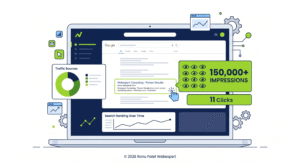
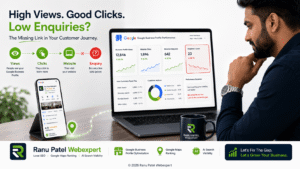
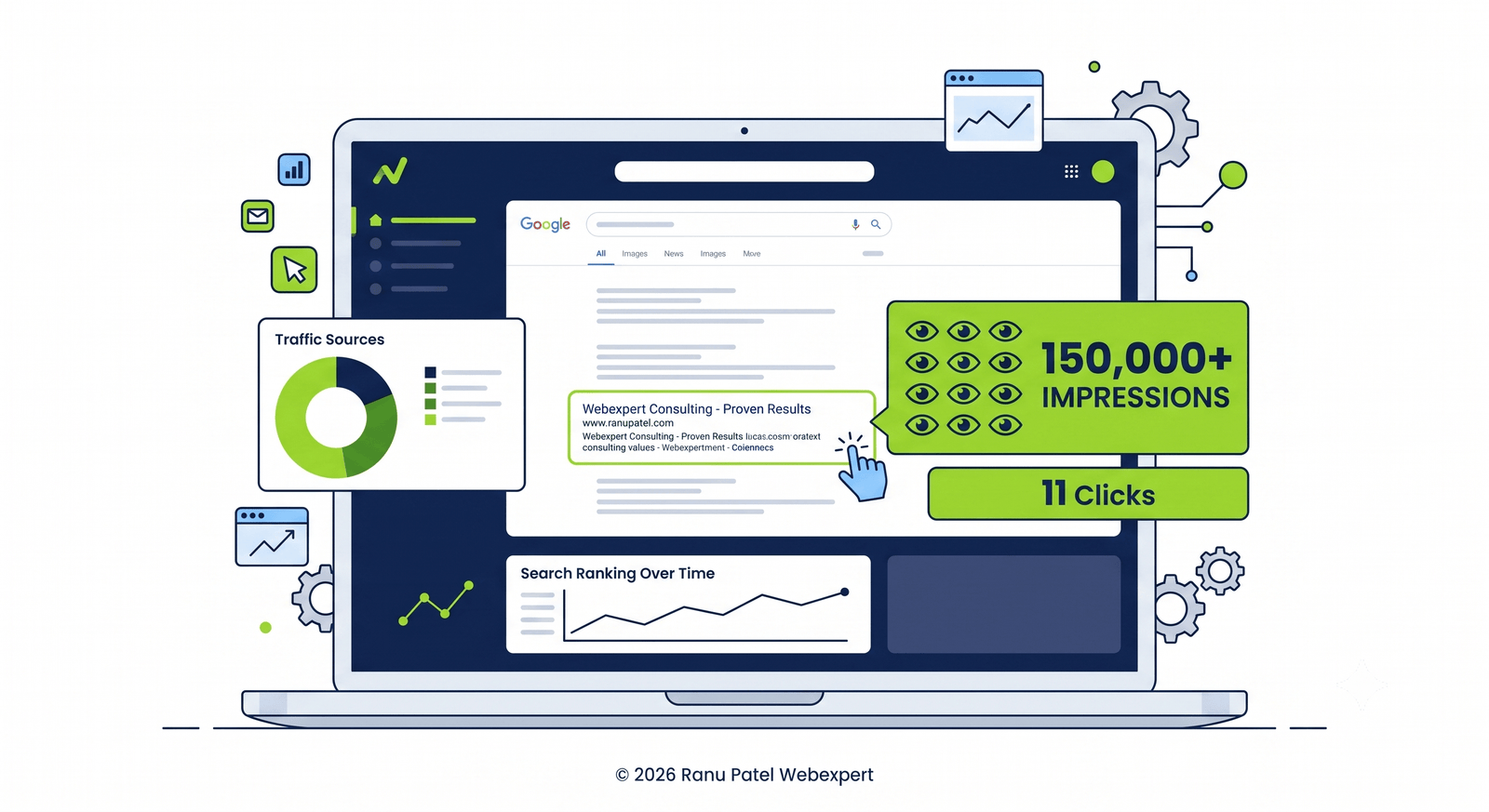
Your Website Is Visible—So Why Isn’t Anyone Visiting?
One of the most common questions I hear from business owners is: “Google says my website is appearing in search results, but hardly anyone visits it. What’s going wrong?”
It’s a completely fair question. After investing heavily in website design, technical SEO, or Google Business Profile optimization, you naturally expect search visibility to convert into steady traffic. However, appearing in search results is only half the battle.
Every search result competes against dozens of alternatives—including top ads, competitor listings, map local packs, video carousels, and AI-generated overviews. Before a user clicks, they evaluate every option to determine which one looks the most helpful, clear, and trustworthy. In many cases, businesses don’t have a ranking problem; they have a click decision problem.
Understanding the Modern Search Journey
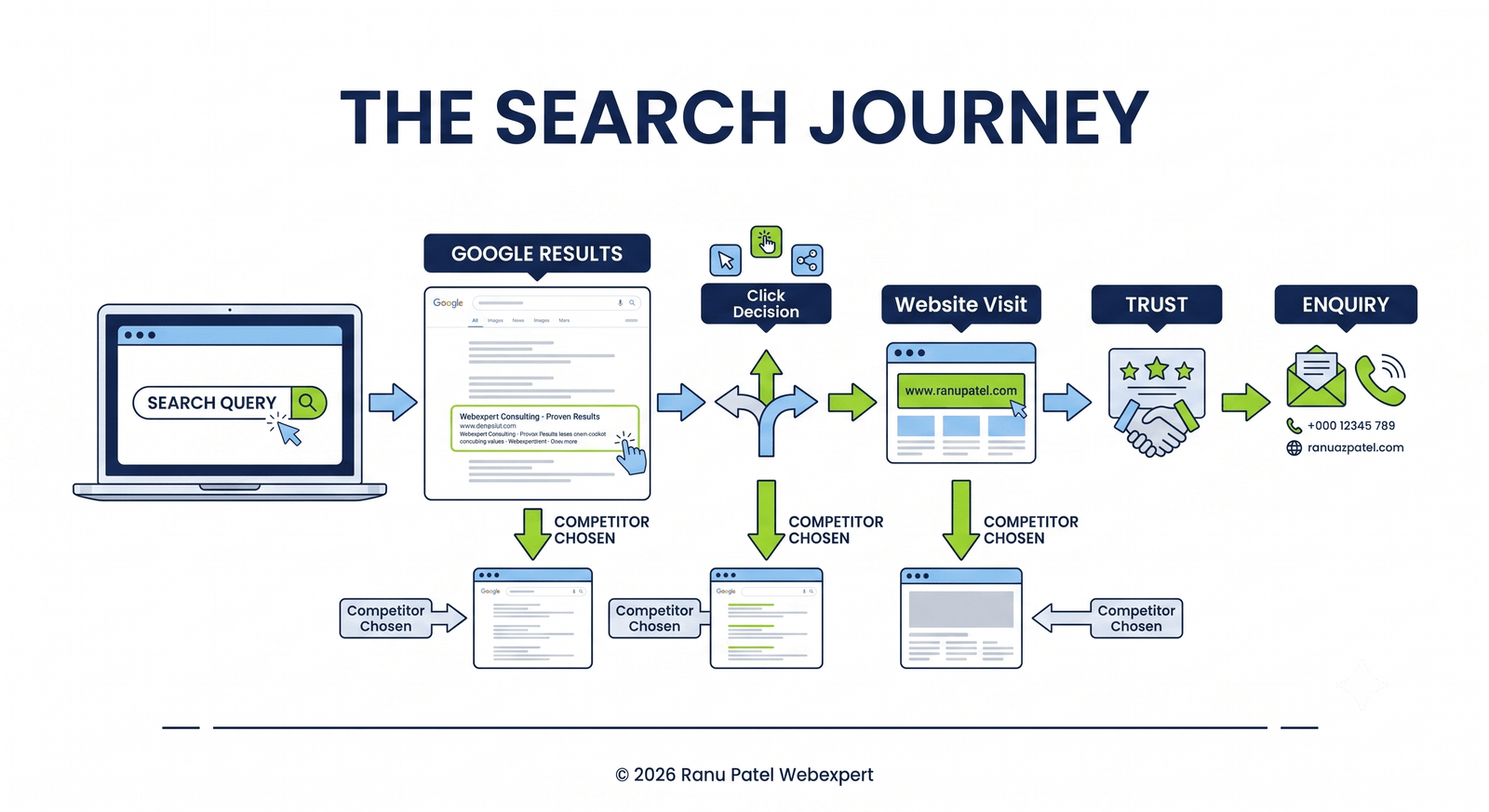
Many business owners view search as a simple three-step line: Google Ranking → Website Visit → Customer. In reality, modern searcher behavior involves multiple micro-decisions before anyone ever lands on your homepage:
- Search Trigger: A potential client searches for a specific business problem or local service.
- Initial Scan: Google displays various search features, maps, ads, and organic snippets.
- Snippet Evaluation: The searcher rapidly scans page titles, meta descriptions, and brand details.
- Relevance Assessment: The searcher determines which result best answers their exact need.
- The Click Decision: They click the single result that builds the highest confidence—or refine their search entirely.
- On-Page Validation: The visitor evaluates the website layout and content for immediate answers.
- Conversion Action: They decide whether to contact the business or return to the search results.
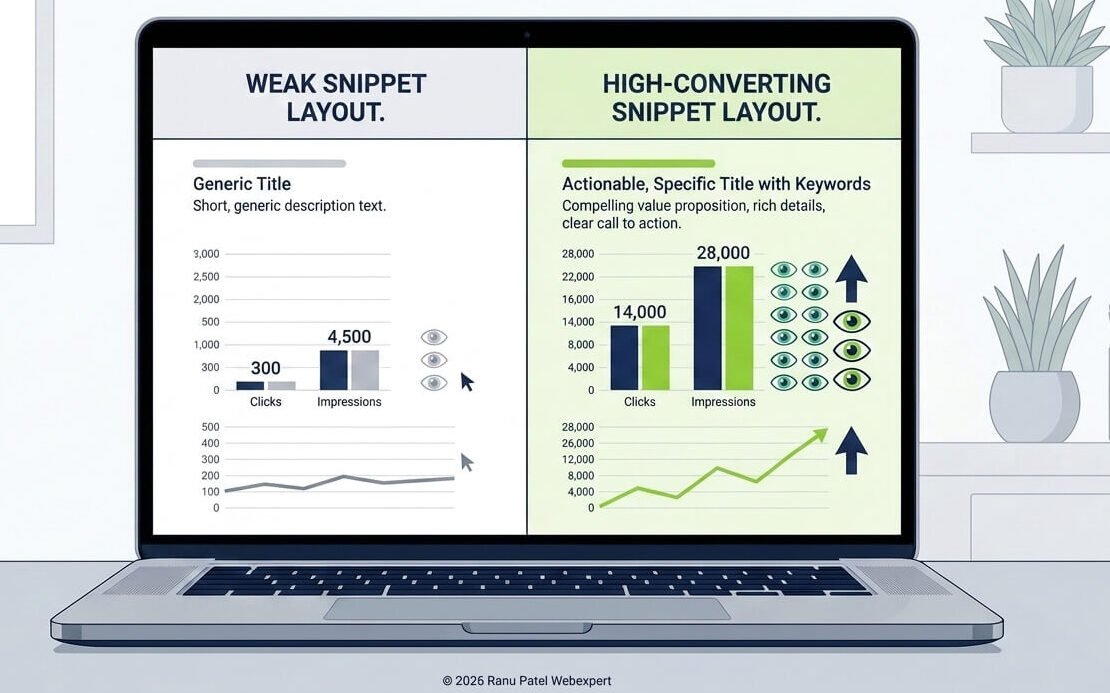
“If your website receives 20,000 monthly impressions at a 1% CTR, you get 200 visits. By improving your CTR to 3% through better messaging—without changing your search position—you triple your traffic to 600 visits.”
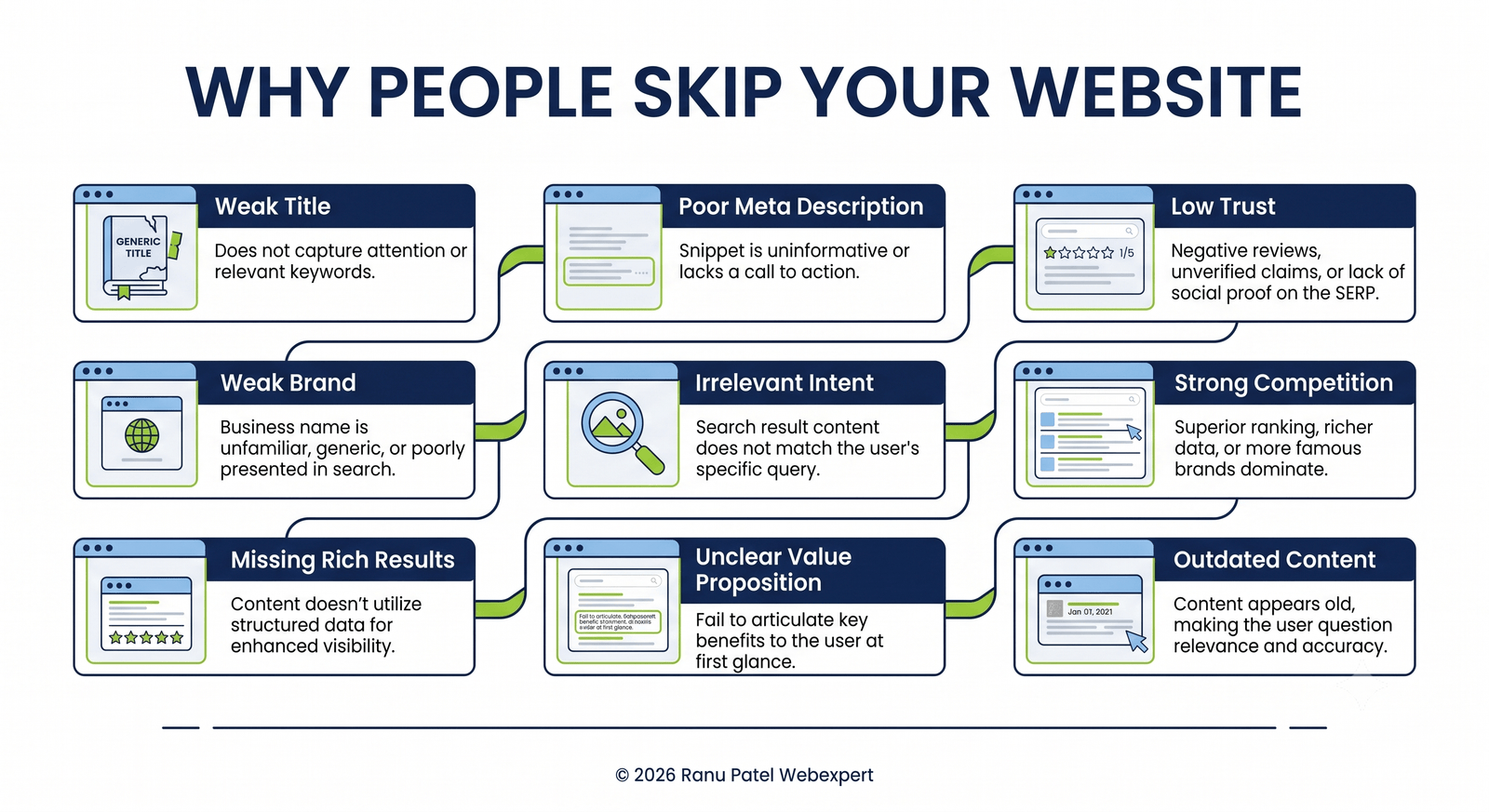
Reason 1: Your Search Result Doesn’t Clearly Explain What You Offer
The Short Answer: Searchers don’t click on company names; they click on immediate solutions to their specific problems.
This is the single most frequent issue discovered during website reviews. Many HTML title tags focus purely on internal brand names or generic phrases (e.g., ABC Solutions | Home). This tells a prospective customer almost nothing about the solutions, target audience, or primary location of the business.
Practical Snippet Optimization Tips
- Write page titles for human decision-makers first, incorporating primary keywords naturally.
- Clearly state what you offer, who it helps, and where you operate.
- Avoid vague marketing fluff like “Best Quality Services” that offers zero decision-making value.
Reason 2: Your Meta Description Doesn’t Create Confidence
The Short Answer: A weak or missing meta description leaves searchers uncertain about what they will find after clicking.
Think of your meta description as a 150-character sales pitch. Many business websites leave descriptions blank, duplicate them across dozens of pages, or use passive sentences like: “Welcome to our official website. We are a leading service provider.”
A high-converting description reduces customer hesitation by summarizing key outcomes, defining the target page content, and outlining clear next steps.
Author Insight: Companies often invest thousands of dollars into website design but ignore how their pages look on Google Search. Reviewing your search snippets is just as important as inspecting your website’s homepage design.
Reason 3: Your Brand Doesn’t Build Trust Before Visitors Even Click
The Short Answer: Users do not automatically click the #1 organic spot; they click the listing that inspires the greatest sense of safety and trust.
| Generic Listing (Low Trust / Low Clicks) | Optimized Listing (High EEAT / High Clicks) |
|---|---|
| ABC Solutions | Services We provide business services for clients. Contact us today to learn more about what we do. | Website Strategy for Manufacturers | 16+ Yrs Experience Helping industrial manufacturers build fast, high-converting websites and improve Local SEO visibility. |
Google evaluates trust signals, but human searchers do so much faster. **EEAT (Experience, Expertise, Authoritativeness, and Trustworthiness)** must be visible right in the search snippet through clear positioning, specialized experience, and recognized industry authority.
Reason 4: You’re Ranking for the Wrong Search Intent
The Short Answer: If a user wants educational research and you show them a hard sales page, they will skip your listing entirely.
Search intent falls into four distinct categories. Mismatching intent is one of the quickest ways to tank your click-through rate:
- Informational Intent: Searchers want knowledge (e.g., “How to improve website click-through rate”). They expect guides, checklists, or educational blogs.
- Commercial Investigation: Searchers are comparing solutions (e.g., “SEO consultant vs digital agency”). They expect detailed comparisons and reviews.
- Transactional Intent: Searchers are ready to hire or buy (e.g., “Hire Local SEO Consultant Ahmedabad”). They expect dedicated service landing pages.
- Navigational Intent: Searchers want a specific brand page (e.g., “Ranu Patel Webexpert consulting”).
Reason 5: Your Competitors Offer More Compelling Search Listings
The Short Answer: Modern searchers don’t evaluate your business in isolation—they weigh your snippet against surrounding competitors in real time.
If competing listings feature specific industry credentials, transparent service areas, structured review stars, or direct answers to niche problems, they will win the click—even if you rank higher organically. Search listings are micro-adverts; clarity and relevance will beat clever marketing jargon every single time.
Reason 6: Your Search Snippet Doesn’t Communicate Clear Value
The Short Answer: A technically valid page title that fails to express a tangible benefit will be ignored by busy prospects.
Compare these two search titles for a professional service firm:
- Weak Value: ABC Technologies | Web Development Services
- Strong Value: Custom B2B Website Architecture for Manufacturers | 16+ Yrs Exp
The second option immediately informs the prospective client about the specialized service, the exact audience, and the team’s depth of industry experience.
Reason 7: Your On-Page Content Fails to Deliver What Was Promised
The Short Answer: If searchers click through but immediately hit a aggressive sales pitch instead of the answer they searched for, they will bounce back to Google.
To retain organic traffic and build business authority, structure high-performing landing pages using this proven sequence:
- Directly answer the searcher’s core query in the opening section.
- Provide practical, actionable details or strategic frameworks.
- Demonstrate real-world experience with relevant case studies or client observations.
- Present a logical next step or professional service opportunity.
Reason 8: Your Business Looks Less Trustworthy Than Surrounding Listings
The Short Answer: Outdated publishing dates, vague author credentials, and missing business details discourage prospective clients from clicking.
Trust isn’t built by a single design element; it comes from consistency across every touchpoint. Ensure your brand presentation remains cohesive across Google Search snippets, Google Maps listings, active social profiles, and your main website design.
Reason 9: You’re Measuring Keyword Rankings Instead of Commercial Outcomes
The Short Answer: Chasing #1 rankings is a vanity goal if those rankings fail to bring qualified visitors and conversion inquiries.
Comprehensive Organic CTR Audit Checklist
- Descriptive, human-first page title
- Unique, outcome-focused meta description
- Clear search intent alignment
- Visible author/founder credentials
- Mobile-optimized page structure
- Fast loading page speed (< 3s)
- Actionable introduction section
- Visible reviews & social proof
- Active Google Business Profile integration
- Frictionless contact process
Key Summary: Why Does Google Show My Website but Nobody Clicks?
Google displays your web pages when they match search query terms, but individual searchers decide whether to click based on your page title clarity, meta description value, perceived brand trust, and intent alignment. Improving these snippet elements allows your business to generate significantly more organic traffic and qualified leads without needing higher keyword rankings.
 Frequently Asked Questions
 Frequently Asked Questions
- 1. Why does Google show my website but nobody clicks it?
Google shows your pages based on topical relevance, but users choose results based on snippet clarity, meta description appeal, brand reputation, and how well the listing matches their immediate intent. - 2. Is ranking on the first page of Google enough to get leads?
No. Ranking on Page 1 creates search visibility, but earning clicks requires messaging that builds confidence and promises clear value over neighboring results. - 3. What is a good Click-Through Rate (CTR) in Google Search?
Average CTR varies wildly depending on search intent, query type, local map packs, and AI features. Rather than relying on generic benchmarks, focus on continually improving your own baseline CTR in Google Search Console. - 4. Can updating my page titles increase organic website traffic?
Yes. If a page already earns search impressions, refining the page title to better reflect customer needs can rapidly increase clicks without requiring any change in position. - 5. How do I identify web pages with low organic CTR?
Open Google Search Console, navigate to Performance, and filter for landing pages with high total impressions but low total clicks and a subpar CTR. - 6. Does Local SEO help improve organic website clicks?
Yes. An optimized Google Business Profile with client reviews, correct business category data, and verified service areas reinforces authority, making searchers more likely to click your web link.
Is Your Website Appearing in Search Results but Missing Out on Clicks?
Stop letting qualified search traffic go to your competitors. Let’s audit your search presentation, fix messaging friction, and start turning search impressions into real customer inquiries.
About the Author
Ranu Patel is a Founder, Website Strategist, and Local SEO Consultant with over 16 years of experience helping corporate entities, industrial firms, and professional service providers improve their search presence. Based in Ahmedabad, India, Ranu combines technical web architecture, Local SEO frameworks, and conversion-focused copywriting to help business owners turn search engine visibility into sustainable business revenue.