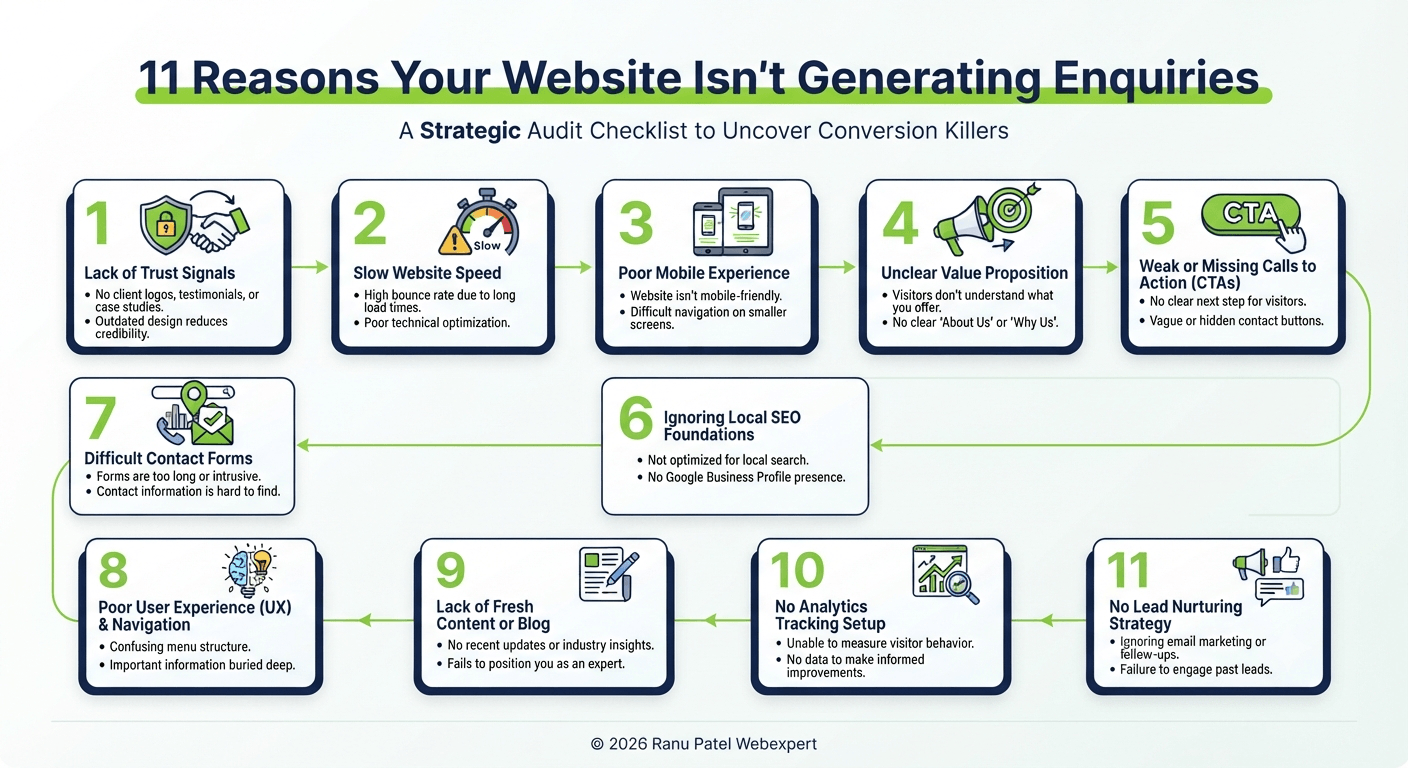
11 Hidden Reasons Most Businesses Overlook (And How to Fix Them)
By Ranu Patel | Last Updated: July 2026 | ~12 min read
Executive Summary: Many business owners assume that increasing website traffic will naturally lead to more enquiries. Unfortunately, traffic and conversions are two different things. A website can receive thousands of visitors and still fail to generate business opportunities if it lacks clarity, trust signals, or a seamless user experience. Based on 16+ years of auditing business websites across multiple global markets, this guide details the 11 hidden friction points preventing conversions and provides actionable fixes for each.
More Website Traffic Doesn’t Always Mean More Business
One of the most common conversations I have with business owners begins with a familiar statement: “Our website gets visitors, but hardly anyone contacts us.”
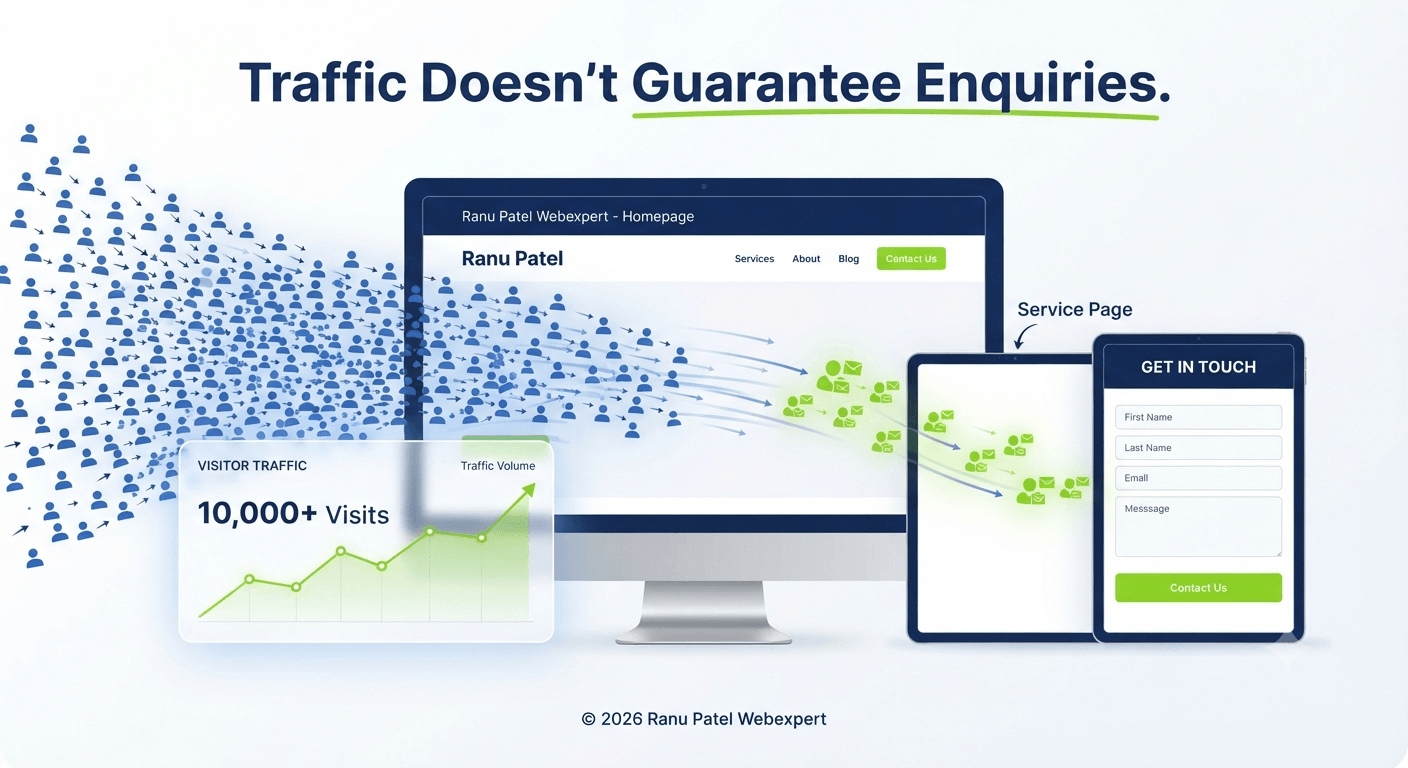
Sometimes they’re investing heavily in SEO. Sometimes they’re running Google Ads, or receiving traffic from social media and referrals. Yet despite attracting visitors, enquiries remain disappointingly low. This often creates the false impression that buying more traffic is the solution. In reality, the quality of the visitor experience usually matters far more than the quantity of traffic.
Imagine owning a physical retail showroom where hundreds of people walk in every day, but almost nobody speaks to your sales team. Would your first response be to advertise harder to get even more people through the door? Probably not. You’d first ask:
- Are visitors finding what they expected?
- Is the showroom easy to navigate?
- Do they trust the business?
- Are products explained clearly?
- Is it obvious what they should do next?
A business website works in exactly the same way. Traffic simply creates an opportunity. Conversions happen only when the website helps visitors move confidently from curiosity to action.
What Counts as an Enquiry?
Before discussing why websites struggle to generate leads, it’s helpful to define what an enquiry actually means for your digital ecosystem. Depending on your business model, an enquiry may include:
- Completing a strategic contact form
- Initiating a direct phone call
- Sending a direct WhatsApp message
- Booking a 1-on-1 consultation session
- Requesting a formal project quotation
- Scheduling a live software demo
- Downloading a structured proposal or audit
While different businesses measure success differently, the underlying objective is always the same: turning interested visitors into meaningful business conversations. That transition depends entirely on how effectively your website communicates, builds trust, and removes friction.
How People Actually Decide to Contact a Business
Business owners often believe that customers make rational decisions based only on price or technical specifications. Real purchasing behavior is usually more nuanced. Visitors move through four distinct stages before reaching out:
- Stage 1 — Discovery: They discover your business through Google Search, Google Maps, AI-powered search engines, or social channels.
- Stage 2 — Evaluation: They quickly scan your homepage, service offerings, reviews, and credentials. Within seconds, they decide whether your business feels trustworthy.
- Stage 3 — Comparison: Most prospects compare several businesses rather than contacting the first company they find. Small differences in clarity, trust signals, or ease of navigation dictate who wins the enquiry.
- Stage 4 — Decision: Only after establishing sufficient confidence do visitors decide to pick up the phone, complete a form, or schedule a call.
“Search engines help people discover your business. Your website helps people decide whether they trust your business. When one stage breaks down, enquiries collapse—even if traffic keeps climbing.”
Reason 5: Your Website Loads Slowly
The Short Answer: A slow website increases frustration, erodes trust, and causes prospective clients to leave before reading your core messaging.
Speed isn’t merely a technical metric; it’s a foundational element of customer experience. When someone clicks your link from search results, social media, or a Google Business Profile, they expect immediate information. If pages lag, visitors instinctively associate the delay with an outdated or unreliable business operation.
Common performance bottlenecks include uncompressed images, low-tier hosting servers, excessive plugin overhead, bloated animations, and unoptimized code scripts.
Practical Speed Checklist
- Compress all images prior to upload and serve modern WebP formats.
- Audit and remove unused or redundant WordPress plugins.
- Migrate to high-performance managed hosting infrastructure.
- Consistently monitor Core Web Vitals via Google Search Console.
Expert Observation: One of the biggest misconceptions is that adding flashy animations makes a website look premium. In reality, modern decision-makers appreciate speed, clarity, and instant responsiveness far more than visual flourishes.
Need a performance health-check? Request a comprehensive Website Audit or consult with an expert WordPress Developer Ahmedabad.
Reason 6: Your Website Doesn’t Work Well on Mobile
The Short Answer: If mobile visitors face layout shifts, unreadable font sizes, or difficult navigation, they will exit without reaching out.
Business owners usually evaluate their web assets on desktop screens during office hours. However, the vast majority of initial prospective customer touches occur via mobile devices during transit or off-hours. Common mobile friction points include tiny text blocks, unclickable text links, misplaced pop-ups, slow mobile rendering, and complex multi-field forms.
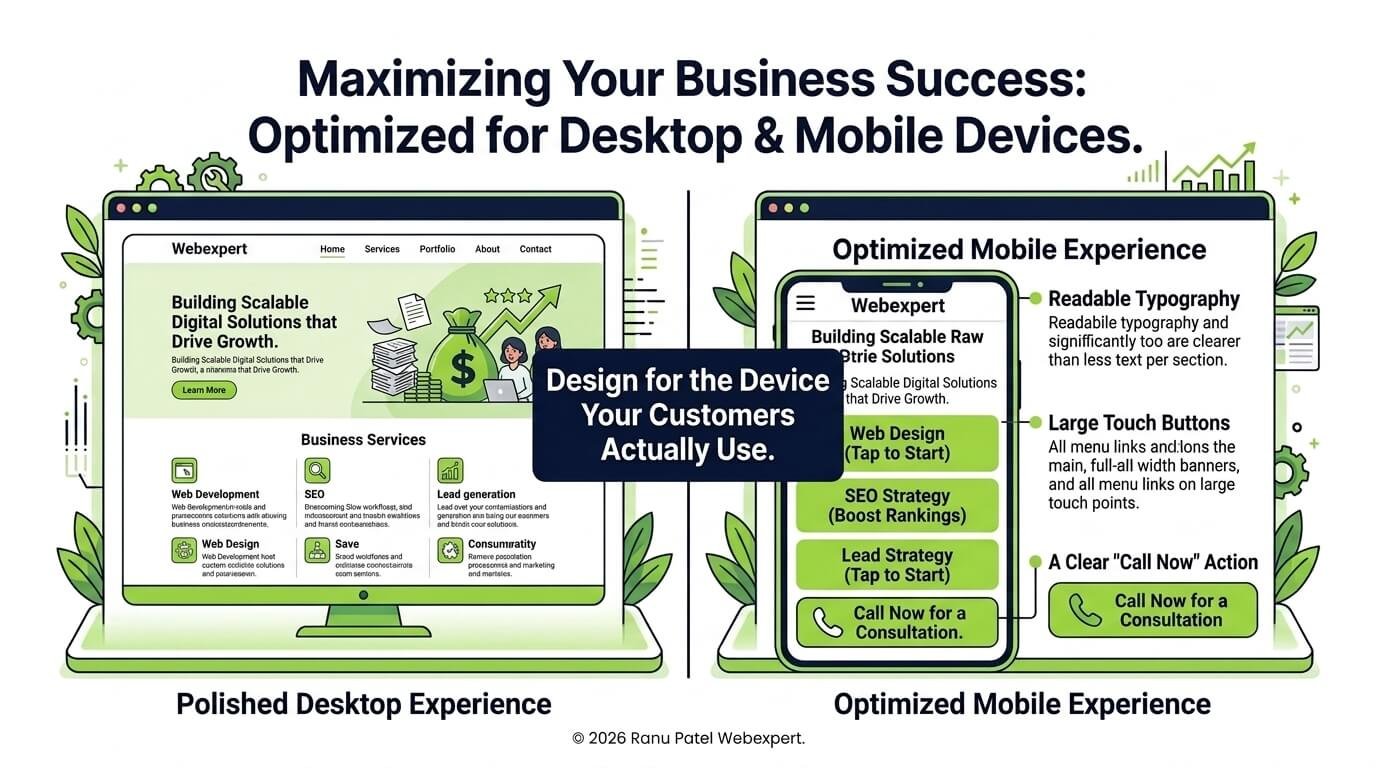
Practical Mobile Checklist
- Test every landing page layout across multiple smartphone viewports.
- Ensure phone numbers are configured as tap-to-call links.
- Streamline contact forms down to minimum required fields.
- Use touch-friendly CTA buttons with generous padding.
Reason 7: Your Service Pages Describe Features Instead of Solving Problems
The Short Answer: Customers don’t buy technical specs; they buy tangible solutions to specific operational or personal challenges.
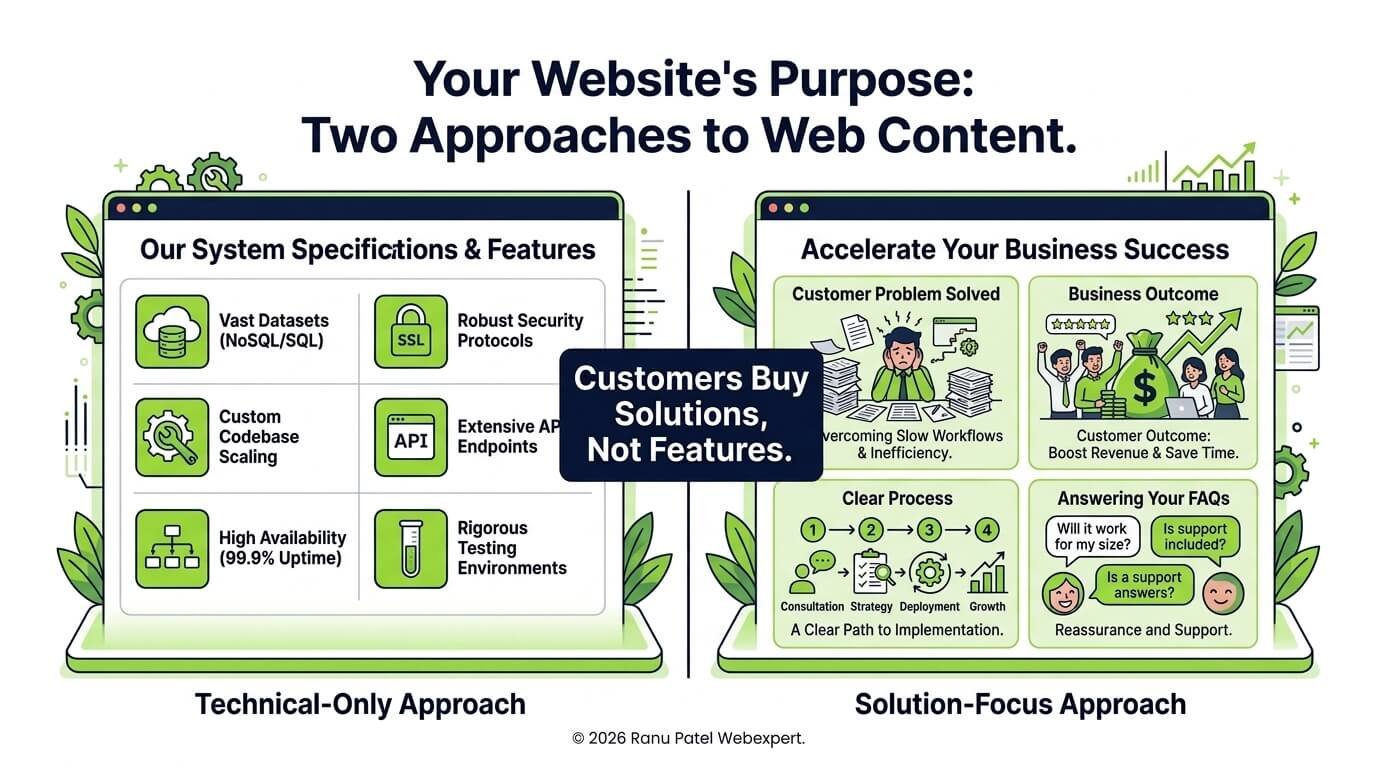
Many business sites focus on internal features rather than client outcomes. For example, instead of listing “Responsive WordPress Architecture,” articulate the value: “An intuitive web platform that lets your customers effortlessly browse services and request quotes from any device.”
| Feature-Focused Copy (Low Conversion) | Outcome-Focused Copy (High Conversion) |
|---|---|
| “We offer Local SEO optimization and Google Business Profile management.” | “We help local customers find your business first when searching for trusted professionals in your city.” |
| “Includes 10 custom page layouts and responsive CSS design.” | “A clean, fast-loading website structure designed to guide visitors directly into booking consultations.” |
For tailored web architecture solutions, explore our specialized Web Design Company Ahmedabad services or connect with an experienced SEO Consultant Ahmedabad.
Reason 8: Your Website Doesn’t Support Local Search
The Short Answer: If search engines can’t explicitly parse your exact services and target geographic service areas, you won’t attract high-intent local buyers.
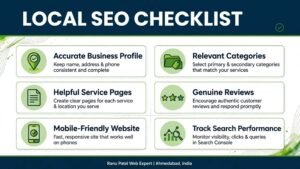
Local SEO isn’t limited to a Google Business Profile listing. Your main website acts as the primary validation engine for search engines. The two must work in tandem to establish local relevance, geographic trust, and transactional capability.
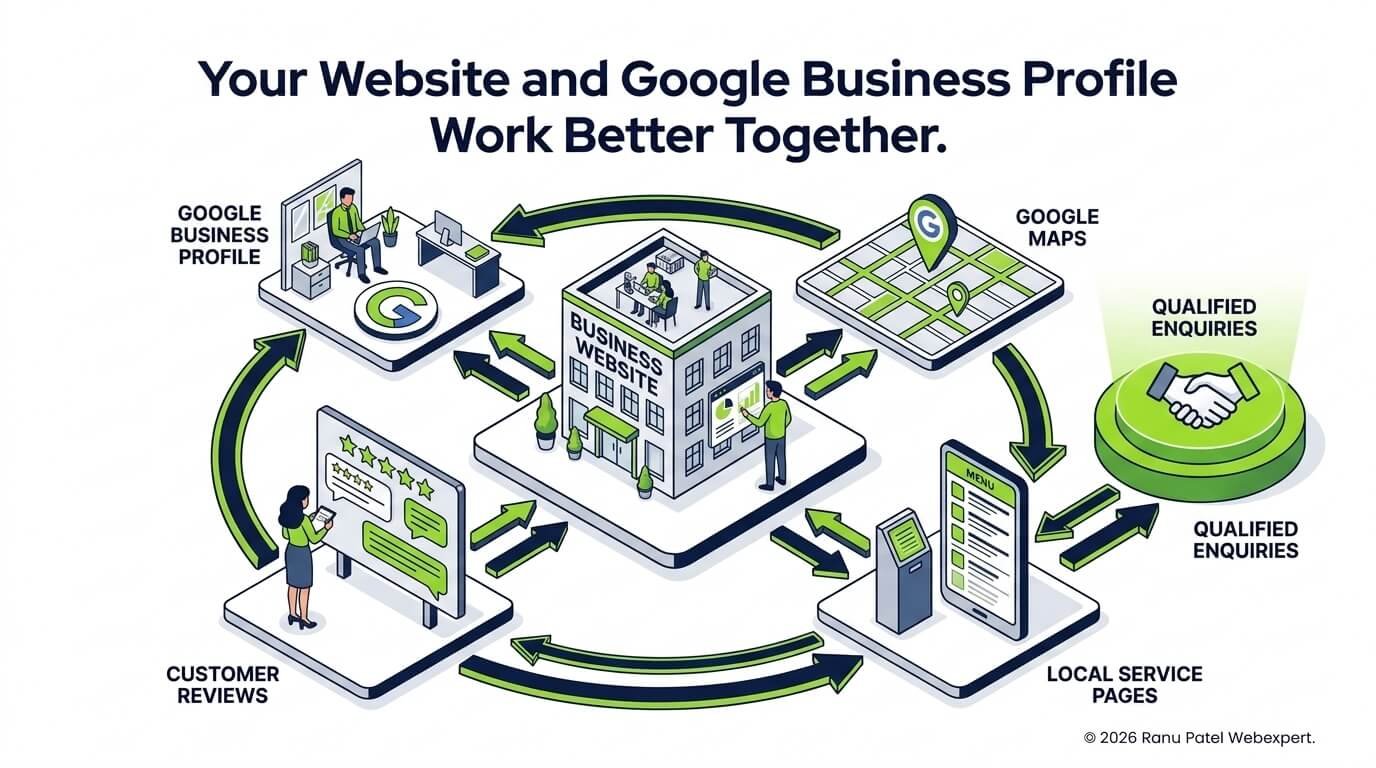
Local SEO Essential Pillars
- Consistent NAP (Name, Address, Phone) details across all footers and contact pages.
- Dedicated service pages tailored to key solution categories.
- Implementation of clean LocalBusiness Schema markup.
- Strategic integration with Google Business Profile Optimisation and localized content assets. Learn more about our Local SEO Services.
Reason 9: Your Contact Process Creates Friction
The Short Answer: Every additional input field, hidden email address, or vague call-to-action causes potential clients to second-guess reaching out.
If your contact page forces visitors to answer 10 mandatory questions before asking a simple question, most will bounce. Replace generic “Submit” or “Contact Us” buttons with clear, high-value conversion points such as “Request a Free Website Review” or “Book a 30-Minute Strategy Session.”
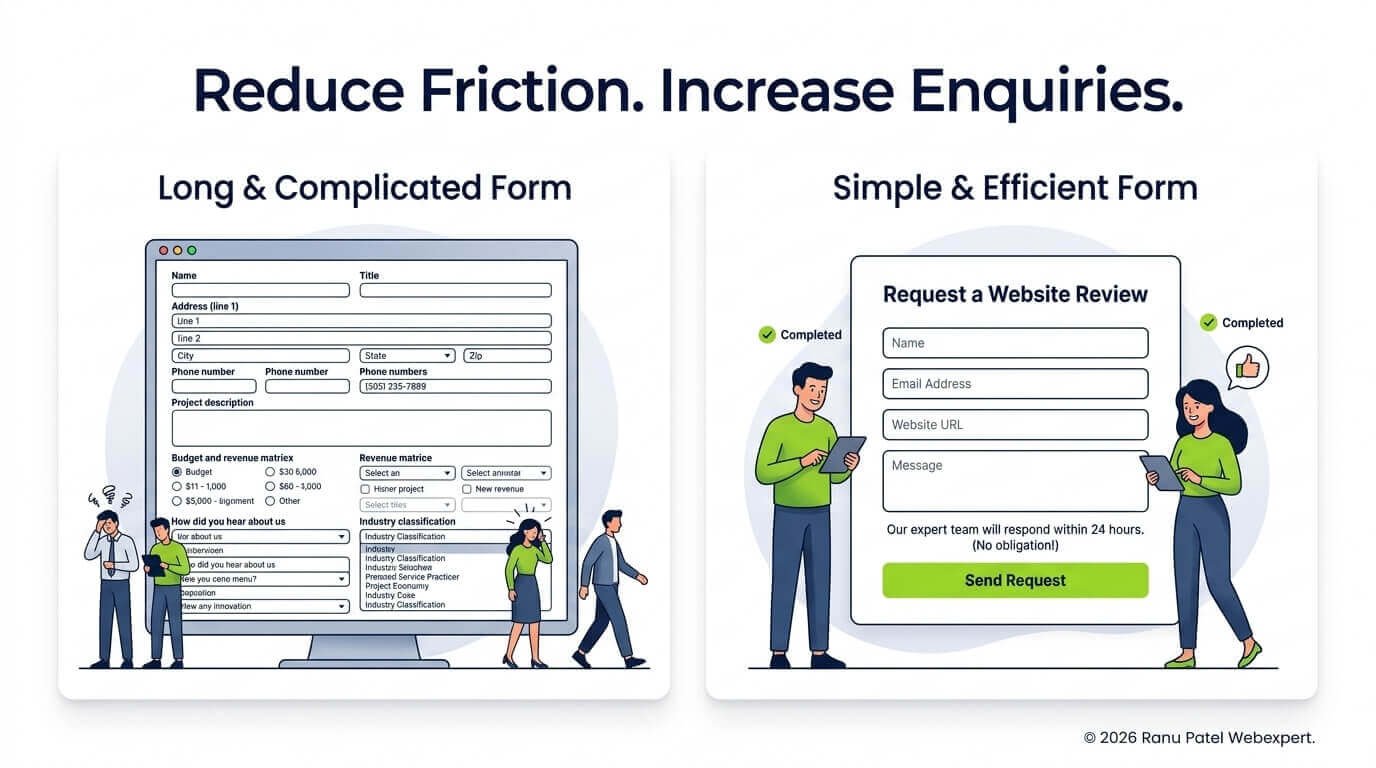
Friction-Reduction Checklist
- Limit initial contact form fields to name, email/phone, and project summary.
- Clearly state expected response times (e.g., “We respond within 24 business hours”).
- Ensure direct phone numbers and email links are easily visible on all pages.
- Regularly test form submission delivery to avoid technical failures.
Reason 10: Your Website Doesn’t Demonstrate Real Experience or Expertise
The Short Answer: Decision-makers contact businesses that prove their track record through real-world evidence, not generic claims.
Trust is established through transparency. Modern search engines and AI engines actively look for EEAT (Experience, Expertise, Authoritativeness, and Trustworthiness) signals. Show visitors who stands behind the business with authentic founder information, project breakdowns, practical case studies, and transparent workflow guides.
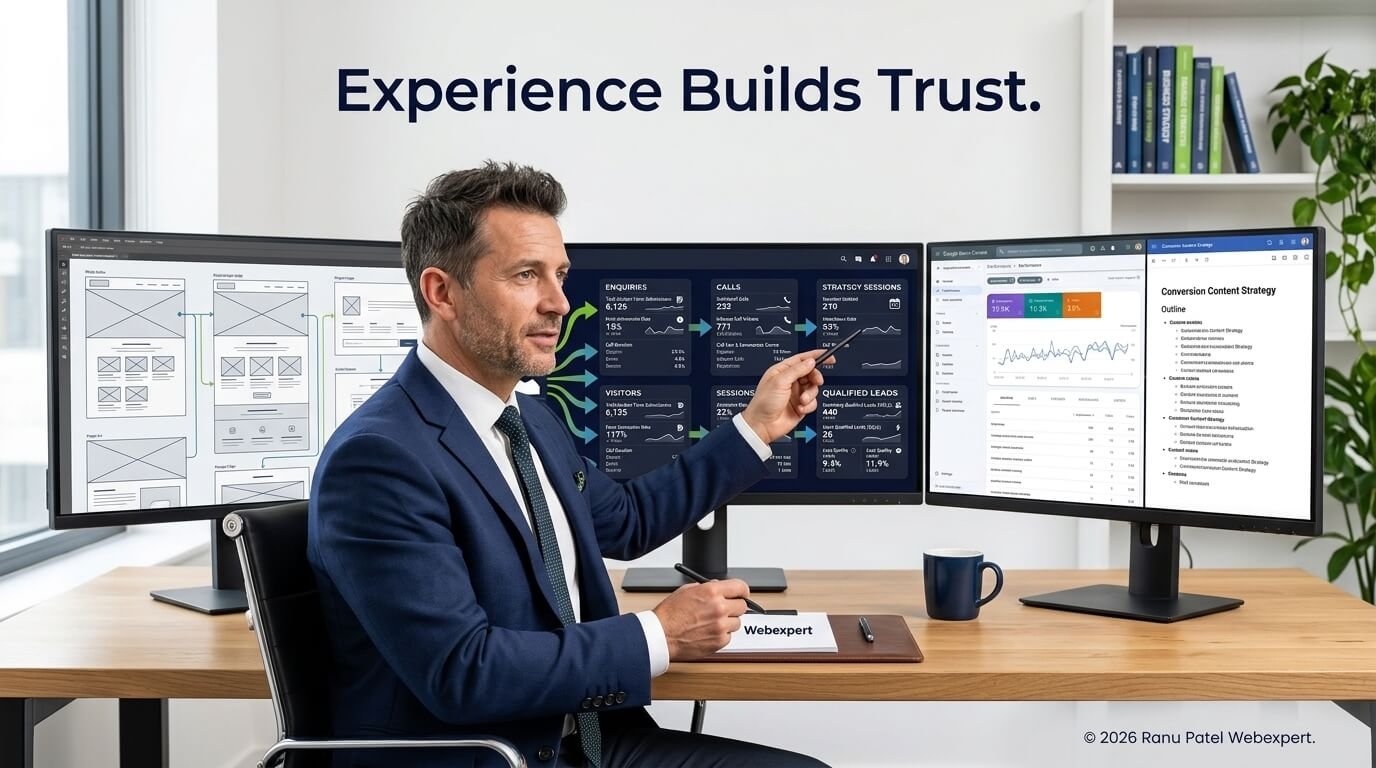
“Authority isn’t claimed through marketing hype; it’s earned by consistently sharing clear, useful insight that helps customers make informed decisions.”
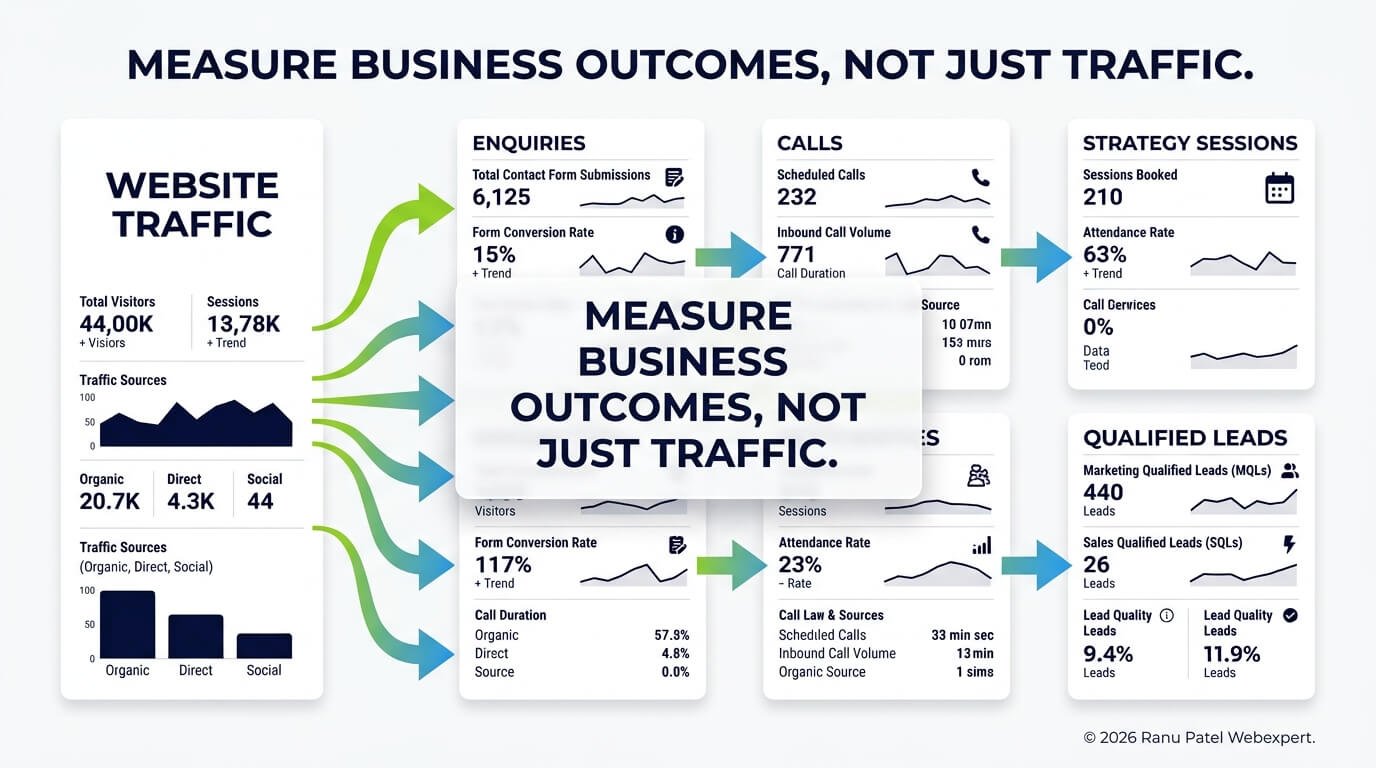
Reason 11: You’re Measuring Traffic Instead of Business Results
The Short Answer: High traffic volume is a vanity metric if it doesn’t generate qualified enquiries and revenue.
Instead of tracking pageviews alone, calibrate your analytics dashboard around true commercial outcomes: phone call leads, form submissions, strategy call bookings, quote requests, and conversion rates on key service pages.
Practical Conversion Audit Checklist
- Clear value statement on homepage
- Visible founder introduction & bio
- Fast mobile loading speed (< 3s)
- Clean, distraction-free navigation
- Dedicated problem-solving service pages
- Clickable phone & email links
- Short, 3-to-4 field contact forms
- Integrated Google Map & Local Schema
- Action-oriented Call-to-Actions
- Verified client testimonials & FAQs
Real Patterns Observed Reviewing Business Websites
Over 16+ years of auditing business websites across global markets, several distinct patterns regularly emerge:
- Pattern 1: Businesses talk extensively about themselves instead of explaining how they help the client solve a problem.
- Pattern 2: Service pages detail features and technical processes but omit the real-world outcomes clients care about.
- Pattern 3: Essential trust factors—like real team photos, client reviews, and direct FAQs—are buried deep in footer subpages.
- Pattern 4: Calls-to-action are either too generic (“Click Here”) or only appear at the very bottom of long pages.
- Pattern 5: Sites attract general search traffic but fail to guide visitors through an intuitive, multi-stage sales journey.
Frequently Asked Questions
- 1. Why does my website get traffic but no enquiries?
A website can attract visitors but fail to generate enquiries if it lacks clear service explanations, proof of expertise, easy navigation, fast loading speeds, or direct calls-to-action that encourage immediate contact. - 2. Can SEO alone generate more enquiries?
SEO helps potential customers discover your business, but it doesn’t guarantee leads. Once visitors arrive, your website must build trust, answer questions, and provide a low-friction contact process. - 3. How do I know if my website has conversion problems?
Key indicators include high overall web traffic alongside low contact form completions, short average session durations on key service pages, high bounce rates, and very few direct phone calls or email enquiries. - 4. Should I completely redesign my website?
Not necessarily. Strategic adjustments—such as refining page messaging, speeding up mobile load times, simplifying contact forms, and adding trust signals—can dramatically increase enquiries without a costly redesign. - 5. Does website speed directly affect client enquiries?
Yes. Slow-loading pages cause immediate visitor drop-off. A delay of just a few seconds can drastically lower overall conversion rates and push visitors toward faster competitors. - 6. Why is mobile optimization critical for lead generation?
Most prospective clients perform initial searches on mobile devices. A mobile-optimized site ensures fast reading, easy navigation, and frictionless tap-to-call or form submission capabilities. - 7. How important are testimonials and client reviews?
Testimonials provide essential social proof that reduces purchasing anxiety. Combined with clear service details and founder expertise, they significantly improve visitor trust. - 8. Does Google Business Profile help generate website enquiries?
Yes. A well-optimized Google Business Profile captures local search intent and directs warm prospects to specific landing pages on your website, increasing local conversions. - 9. What essential elements belong on every service page?
Every service page should detail who the service helps, the specific problem it solves, the step-by-step engagement process, expected client outcomes, clear FAQs, and a distinct call-to-action. - 10. Why are specific calls-to-action more effective than generic buttons?
Specific CTAs like “Request a Free Website Review” define clear value for taking action, whereas generic buttons like “Submit” or “Contact Us” create uncertainty. - 11. What metrics matter more than raw visitor traffic?
Business-focused metrics—such as qualified phone enquiries, form submissions, consultation bookings, quote requests, and customer acquisition costs—are much better indicators of growth. - 12. How can I quickly improve my website’s conversion rate?
Start by auditing your homepage clarity, improving site speed, simplifying forms, adding real trust signals, optimizing service pages for customer outcomes, and embedding action-oriented CTAs.
Ready to Turn Your Website Traffic Into Enquiries?
Stop letting qualified prospects leave without reaching out. Let’s review your website strategy, eliminate hidden friction points, and build a digital asset designed for growth.
About the Author
Ranu Patel is a Website Strategist, Local SEO Consultant, and WordPress Specialist with over 16 years of corporate expertise helping businesses improve digital visibility and convert visitors into qualified business leads. Based in Ahmedabad, Gujarat, Ranu works with companies across India and international markets, combining strategy, Local SEO, and user-focused web architecture to build assets that drive long-term business growth.